Traditional Chinese vs Simplified Chinese
What is the difference between Simplified and Traditional Chinese
First, when people talk about “Traditional” vs “Simplified” Chinese, they are referring to written language. These terms do not refer to spoken or “vernacular” language.
Modern China has many spoken dialects, but Chinese is not phonetic like most other modern languages. In fact, no matter what dialect people speak in mainland China today, the way they write Chinese characters is the same.
Let’s dive deeper into Simplified Chinese vs Traditional
Usage of Traditional Chinese around China
Since the 1950s, the government and the general public in mainland China officially adopted Simplified Chinese. However, people in Taiwan and Hong Kong continue to use the traditional system.
Most Chinese immigrants who left mainland China before the reforms still use Traditional Chinese. This is why residents in China Towns around the world typically still use Traditional Chinese.
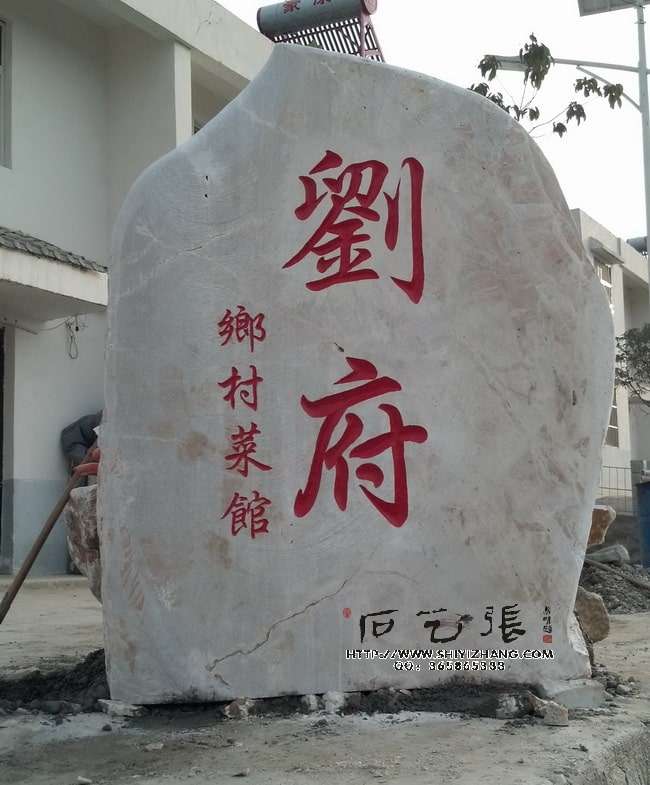
The Traditional Chinese characters carved on stone.
The split between Simplified and Traditional Chinese reflects geopolitical realities across Chinese-speaking regions:
- Simplified: Used in mainland China (PRC) and Singapore, boosting literacy rates with fewer number of characters
- Traditional: Official in Hong Kong and Macau, Taiwan (Republic of China), and overseas communities
This form of Chinese you encounter depends on location, not linguistics.
The Origin of Simplified Chinese Characters
In the 1950s, the government of mainland China began reforming the writing system by simplifying Chinese characters. The goal of these reforms was to reduce illiteracy by making Chinese characters easier to learn.
The simplification process reduced the number of strokes required to write each character. This was intended to make the characters easier to learn and faster and more convenient to write.
The characters created through this simplification process are known as Simplified Chinese Characters, or jiǎntǐzì (简体字).
Let’s look at some examples to understand the difference between Simplified vs Traditional Chinese characters:
Example Character 1: 爱 (Love)
Many people use the character for “love” as an example of one that has been modified—though not drastically. The Simplified version is 爱 (ài), while the Traditional version is 愛.
At first glance, these two characters look quite similar. However, when we compare their enlarged versions side by side, the differences become clear
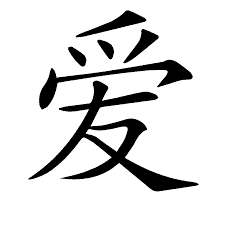
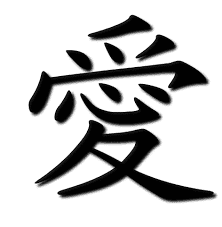
Simplified (left) Traditional (right)
The biggest difference is that the Traditional character on the right includes “心” (xīn), while the Simplified character on the left does not. “心” which means heart often appears in characters related to emotions, which explains why it appears in the character for “love” (爱).
Those who support the continued use of Traditional Chinese often use “爱” as an example. They believe that the presence of the “heart” radical in Traditional characters reflects the enduring historical and cultural value of Traditional Chinese.
Example Character 2: 电 (Electric)
Another example of the difference between Simplified vs Traditional Chinese characters is the character for “electric” (电).
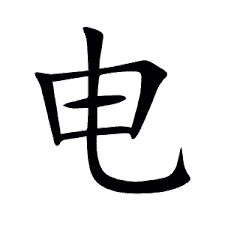

Simplified (left) Traditional (right)
In this example, the Traditional Chinese character on the right includes “雨” (yǔ), which represents “rain.” However, in the Simplified version on the left, “雨” is noticeably absent. The Traditional character for “electric” includes the element for “rain” because, in ancient times, people associated electricity with thunderstorms.
Example Character 3: 开 (Open)
The character “开” (kāi) in Simplified Chinese, or “開” in Traditional Chinese, is another interesting example:
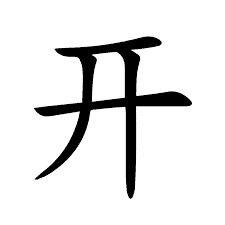
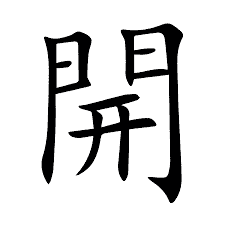
Simplified (left) Traditional (right)
Once again, it’s easy to see how the reformers simplified this character. The Traditional character on the right includes the radical “门” (mén), which means “door,” or “门” in Simplified Chinese. This makes sense because a door is something people often open. However, in the Simplified version on the left, the traditional “门” radical disappears, leaving only the easier-to-write central part.
Example Character 4: 书 (Book)
Reformers had more ways to simplify Traditional Chinese characters than just removing certain parts. One example of a character that was simplified in a less direct way is the character for “book” (书).
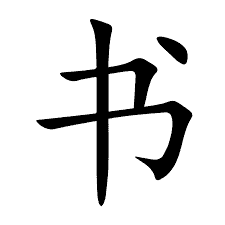
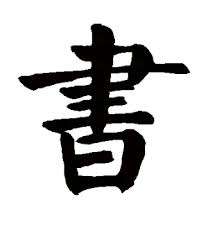
Simplified (left) Traditional (right)
As you can see, the Traditional form of the character on the right does not contain any parts that resemble the Simplified version on the left.
To an untrained eye, these two versions of “book” may seem more or less unrelated. However, upon closer inspection, you may notice that their overall shapes are somewhat similar. This is because the Simplified version is based on how calligraphers used to write the Traditional form in ancient cursive script (cǎoshū). The cursive script of the Traditional character looks very similar to the modern Simplified version. This fact illustrates the origin of this simplification.
Which one should I study, Traditional or Simplified Chinese?
Which Chinese script you should learn actually depends on where you plan to spend most of your time. You should also consider how you intend to use your Chinese skills. If you plan to work in mainland China, learning Simplified Chinese may be sufficient for you.
However, keep in mind that people in mainland China still use some Traditional characters in certain cases. For example, people sometimes use Traditional characters when writing the names of universities, bookstores, historical buildings, or important places.
Additionally, business owners and advertisers sometimes use Traditional characters in advertisements. They feel that linking their products to symbols of ancient history and culture makes them appear more reliable. Nevertheless, most people who plan to live and work in mainland China find that understanding Simplified Chinese is enough to meet their needs.
If you plan to work in Taiwan or Hong Kong, learning Traditional Chinese may be a good choice. If you plan to become a scholar specializing in pre-modern Chinese history or literature, learning Traditional Chinese will also be beneficial. This is because it will allow you to recognize the original characters used in Classical Chinese texts (for more information on the relationship between Classical Chinese and Traditional Chinese, see the next section).
Are Traditional Chinese and Classical Chinese the same?
Contrary to some people’s beliefs, Traditional Chinese (fántǐzì) and Classical Chinese (wényánwén) are not the same. As mentioned earlier, the terms “Traditional” and “Simplified” refer to the writing forms of individual Chinese characters.
Both Traditional and Simplified Chinese can be used to write modern vernacular Chinese (bái huà wén). Regardless of which script you use, the words and grammar remain unchanged. The only difference is the shape of the individual characters.
After reading this, you should have a better understanding of the differences between Simplified vs Traditional Chinese. Students starting with Simplified Chinese often find it challenging to learn Traditional Chinese. However, it’s still worth learning at least some Traditional characters. Studying this ancient form of writing can give you new insights into the historical evolution of the Chinese language.
Ready to embark on your Chinese language journey? Contact ApplyForChina today to learn more about studying Chinese at top Chinese universities.
If you want to explore further, check out the table below, which shows the differences between Simplified (jiǎntǐzì) and Traditional (fántǐzì) characters:
| Simplified | Traditional | pīnyīn | English Meaning |
| 的 | N/A | de | (possessive particle), of / really and truly / aim, clear |
| 一 | N/A | yī / yì /yí | one / single / a(n) |
| 是 | N/A | shì | is, are, am, yes to be |
| 不 | N/A | bù | (negative prefix) no, not |
| 了 | N/A | le/liǎo | (modal particle intensifying preceding clause), (past tense marker) / to know, to understand, to know |
| 人 | N/A | rén | man, person, people |
| 我 | N/A | wǒ | I, me, myself |
| 在 | N/A | zài | (located) at, in, exist |
| 有 | N/A | to have, there is, there are, to exist, to be | |
| 他 | N/A | tā | he, him |
| 这 | 這 | zhè | this/ these |
| 为 | 為 | wéi / wèi | act as, take…to be, to be, to do, to serve as, to become / because of, for, to |
| 大 | N/A | dà | big, huge, large, major, great, wide, deep, oldest, eldest / doctor |
| 来 | 來 | lái | to come |
| 以 | N/A | yǐ | to use, take, according to, because of, in order to |
| 个 | 個 | gè | (a measure word), individual |
| 中 | N/A | zhōng | within, among, in, middle, center, while (doing something), during |
| 上 | N/A | shàng | above, on, over, top, (go) up, last, previous |
| 们 | 們 | men | (plural marker for pronouns and a few animate nouns) |
| 到 | N/A | dào | to (a place), until (a time), up to, to go, to arrive |
| 说 | 説 | shuō | to speak, to say |
| 国 | 國 | guó | country, state, nation |
| 和 | N/A | hé / huò | and, together, with, peace / harmony |
| 地 | N/A | de / dì | -ly / earth, ground, field, place, land |
| 也 | N/A | yě | too, also, as well |
| 子 | N/A | zǐ | child, son |
| 时 | 時 | shí | time, when, hour, period, season |
| 道 | N/A | dào | direction, way, method, road, path, principle, truth, reason, skill, method, Tao (of Taoism), a measure word, to say, to speak, to talk |
| 出 | N/A | chū | to go out, to come out, to occur, to produce, to go beyond, to rise, to put forth, to occur, to happen |
| 而 | N/A | ér | and, as well as, but (not), yet (not), (shows causal relation), (shows change of state), (shows contrast) |
| 要 | N/A | yào / yāo | vital, to want, to be going to, must / demand, ask, request |
| 于 | 於 | yú | at, in, in regard to |
| 就 | N/A | jiù | at once, then, right away, only, just |
| 下 | N/A | xià | below, under, (go) down, next (as opposed to previous/last) |
| 得 | N/A | dé / de / děi | obtain, get, gain, to have to, must, ought to, to need to |
| 可 | N/A | kě | can, may, able to, certain(ly), (particle used for emphasis) |
| 你 | N/A | nǐ | you |
| 年 | N/A | nián | year |
| 生 | N/A | shēng | to be born, to give birth, life, to grow |
| 自 | N/A | zì | from, self, oneself, since |
| 会 | 會 | huì | can, able, meet, meeting, society, union, party |
| 那 | N/A | nà | That,those |
| 后 | 後 | hòu | back, behind, rear, afterwards, after, later |
| 能 | N/A | néng | can, may, capable, energy, able |
| 对 | 對 | duì | couple, pair, to be opposite, to oppose, to face, for, to, correct (answer), to answer, to reply, to direct (towards something), right |
| 着 | 著 | Zhe/zhuó/zhāo/zháo | verb particle marking a continuing progress/state |
| 事 | N/A | shì | matter, thing, item, work, affair |
| 其 | N/A | qí | his, her, its, theirs, that, such, it (refers to something preceding it) |
| 里 | 裏/裡 | lǐ | within, inside |
| 所 | N/A | suǒ | Actually,place |
| 去 | N/A | qù | to go, to leave, to depart |
| 行 | N/A | háng / xíng | a row, profession, professional / all right, capable, competent, okay, to go, to do, to travel, temporary, to walk, to go, will do / behavior, conduct |
| 过 | 過 | guò | (past tense marker), to cross, to go over, to pass (time), to live, to get along, (surname) |
| 家 | N/A | jiā | home, family, a person engaged in a certain art or profession |
| 十 | N/A | shí | ten |
| 用 | N/A | yòng | to use |
| 发 | 發(to send);髮 (hair) | fā/fà | to send out, to show (one‘s feeling), to issue, to develop / hair |
| 天 | N/A | tiān | day, sky, heaven |
| 如 | N/A | rú | as (if), such as |
| 然 | N/A | rán | correct, right, so, thus, like this, -ly |
| 作 | N/A | zuò | to regard as, to take (somebody) for, to do, to make |
| 方 | N/A | fāng | square, quadrilateral, direction, just |
| 成 | N/A | chéng | finish, complete, accomplish, become, turn into, win, succeed |
| 者 | N/A | zhě | -ist, -er (person), person (who does something) |
| 多 | N/A | duō | many, much, a lot of, numerous, multi- |
| 日 | N/A | rì | day, sun, date, day of the month |
| 都 | N/A | dōu | all, both (if two things are involved), entirely (due to)each, even, already |
| 三 | N/A | sān | three |
| 小 | N/A | xiǎo | small, tiny, few, young |
| 军 | 軍 | jūn | army, military, arms |
| 二 | N/A | èr | two |
| 无 | 無 | wú | -less, not to have, no, none, not, to lack, un- |
| 同 | N/A | tóng | like, same, similar, together, alike, with |
| 么 | 麼 | me | (interrog. suff.) |
| 经 | 經 | jīng | classics, sacred book, pass through, to undergo, scripture |
| 法 | N/A | fǎ | law, method, way, Buddhist teaching |
| 当 | 當 | dāng / dàng | to be, to act as, manage, withstand, when, during, ought, should, match equally, equal, same, obstruct, just at (a time or place), on the spot, right, just at / at or in the very same…, to pawn, suitable, adequate, fitting, proper, replace, represent |
| 起 | N/A | qǐ | qǐ:to rise, to raise, to get up |
| 与 | 與 | yú / yǔ / yù | (interrog. part.) / and, to give, together with / take part in |
| 好 | N/A | hǎo / hào | good, well / be fond of |
| 看 | N/A | kān / kàn | to look after, to take care of, to watch, to guard / it depends, think, to see, to look at |
| 学 | 學 | xué | learn, study, science, -ology |
| 进 | 進 | jìn | advance, enter, to come in |
| 种 | 種 | zhǒng / zhòng | kind, type, race (of people), seed, type / to grow, to plant |
| 将 | 將 | jiāng / jiàng | (will, shall, future tense), ready, prepared, to get, to use / a general |
| 还 | 還 | hái / huán | also, in addition, more, still, else, still, yet, (not) yet / (surname), pay back, return |
| 分 | N/A | fēn / fèn | to divide, minute, (a measure word), (a unit of length = 0.33centimeter) / part |
| 此 | N/A | cǐ | this, these |
| 心 | N/A | xīn | heart, mind |
| 前 | N/A | qián | before, in front, ago, former, previous, earlier, front |
| 面 | 麵 | miàn | face, side, surface, aspect, top, face, flour, noodles |
| 又 | N/A | yòu | (once) again, also, both… and…, again |
| 定 | N/A | dìng | to set, to fix, to determine, to decide, to order |
| 见 | 見 | jiàn / xiàn | to see, to meet, to appear (to be something), to interview / appear |
| 只 | 隻 | zhī/zhǐ | only, just, but, measure word for one of a pair |
| 主 | N/A | zhǔ | to own, to host, master, lord, primary |
| 没 | N/A | méi/mò | (negative prefix for verbs), have not, not / sink, disappear |
| 公 | N/A | gōng | just, honorable (designation), public, common |
| 从 | 從 | cóng | from, since,obey, observe, follow |