
Best Apps and Websites to Learn Chinese Online
Best App to Learn Chinese + Websites in 2026
Learning Chinese is easier today. You can start with a language learning app, then use websites for grammar, reading, and real-life practice.
The best app to learn Chinese depends on your goal. Some apps help with Chinese tones and Chinese pinyin. Others help you read each Chinese character, remember stroke order, or speak Chinese with a native Chinese speaker.
For the best result, use both apps and websites. This gives you a stronger path for Chinese language learning, especially for long term progress.
Quick Guide: What Should You Use?
Choose based on your main goal:
- Beginner Mandarin lessons: HelloChinese or ChineseSkill
- Free daily practice: Duolingo
- Dictionary and word lookup: Pleco
- Reading and listening: Du Chinese
- Chinese character writing: Skritter
- Speaking practice: HelloTalk
- Pronunciation and tones: Yoyo Chinese
- Grammar support: Chinese Grammar Wiki
- HSK level review: HSK-focused websites and apps
This mix helps you learn Mandarin Chinese in a more complete way.
Best Apps to Learn Chinese
1. HelloChinese: Best Beginner App

HelloChinese works well for beginners. It teaches pinyin, tones, words, grammar, reading, writing, and speaking.
In addition, the app includes speech practice, native-speaker videos, and character writing. This makes it a strong first learning program for students starting from zero.
Best for: beginners who need structure
Good points: beginner-friendly lessons, speaking and writing practice, grammar, and native-speaker videos
Limit: mainly designed for beginners; advanced learners may need harder reading and speaking tools later
Price: Free version available. Premium is about USD $11.99/month, or USD $69.99/year for U.S. Customers.
2. Duolingo: Best Free Daily Practice App
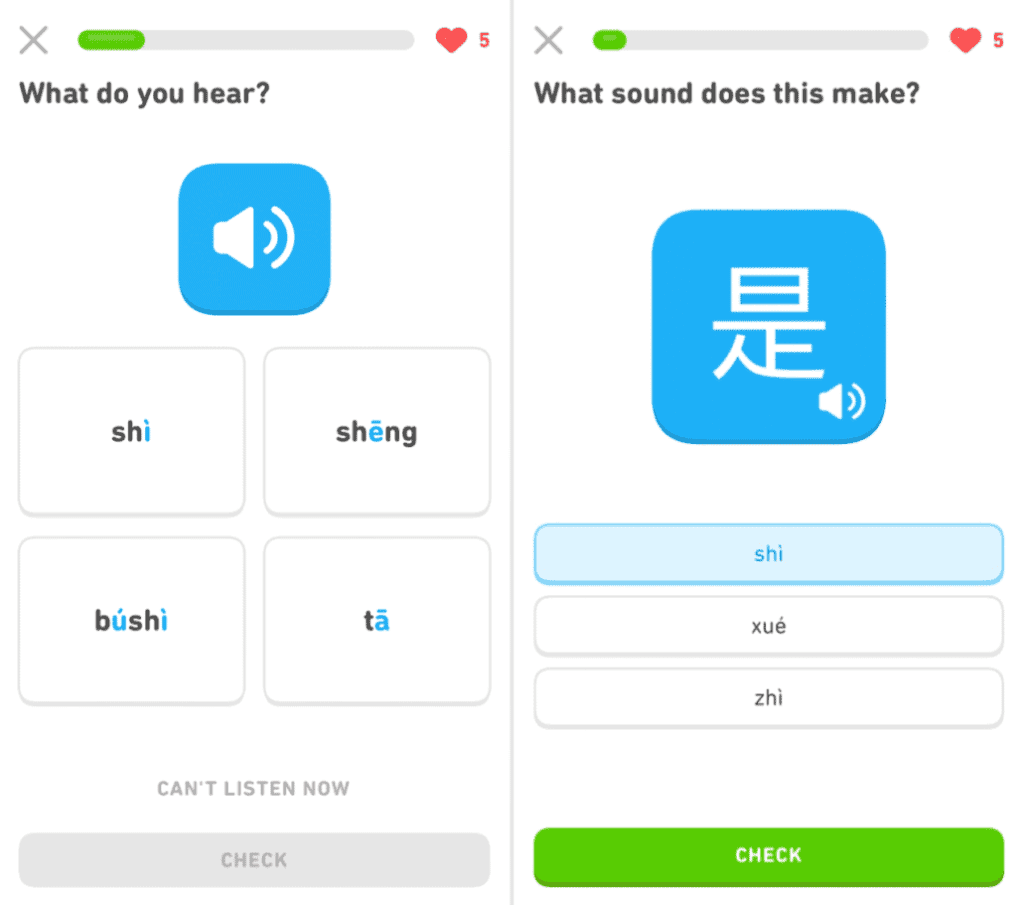
Duolingo helps beginners build a study habit. The lessons are short, simple, and easy to repeat.
However, it works best as a starting tool, not as a full Chinese course. Pair it with Pleco, HelloTalk, or Yoyo Chinese for stronger results.
Best for: free daily review
Good points: short lessons, easy daily practice, and strong habit-building
Limit: less depth for grammar, natural conversation, and Chinese character writing
Price: Free version available. Super Duolingo pricing varies by country, but common U.S. pricing is around USD $12.99/month or about USD $84/year.
3. Pleco: Best Chinese Dictionary App
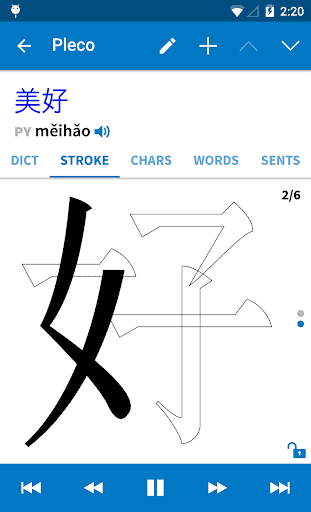
Pleco is one of the most useful apps for Chinese learners. It helps you look up words, characters, and example sentences.
In addition, you can use handwriting input, OCR, audio, flashcards, and reading tools. Many students keep using Pleco for years.
Best for: word lookup and study support
Good points: detailed dictionary search, handwriting input, OCR, flashcards, audio, and reading tools
Limit: better as a study-support tool than a complete step-by-step course
Price: Free core app available. Pleco also offers optional paid add-ons, such as extra dictionaries and advanced tools.
4. Du Chinese: Best Reading and Listening App

Du Chinese helps learners read short Chinese stories and articles. The content comes with audio, pinyin, word meanings, and translations.
This app also supports Mandarin Language Learning and Chinese Culture because many stories show daily life, habits, and real situations.
Best for: reading and listening practice
Good points: graded stories, native audio, useful support tools
Limit: works better after basic Mandarin study
Price: Free lessons available. Premium is USD $14.99/month, USD $79.99/6 months, or USD $119.99/year. (Du Chinese)
5. Skritter: Best App for Chinese Characters

Skritter focuses on writing Chinese characters. You write on the screen and the app checks your stroke order.
This helps learners remember characters through active practice, not just reading.
Best for: character writing
Good points: stroke order, writing feedback, spaced repetition
Limit: not made for full speaking or grammar lessons
Price: Skritter costs USD $14.99/month, with longer plans from USD $59.99/6 months or USD $99.99/year. (Skritter)
6. HelloTalk: Best for Language Exchange
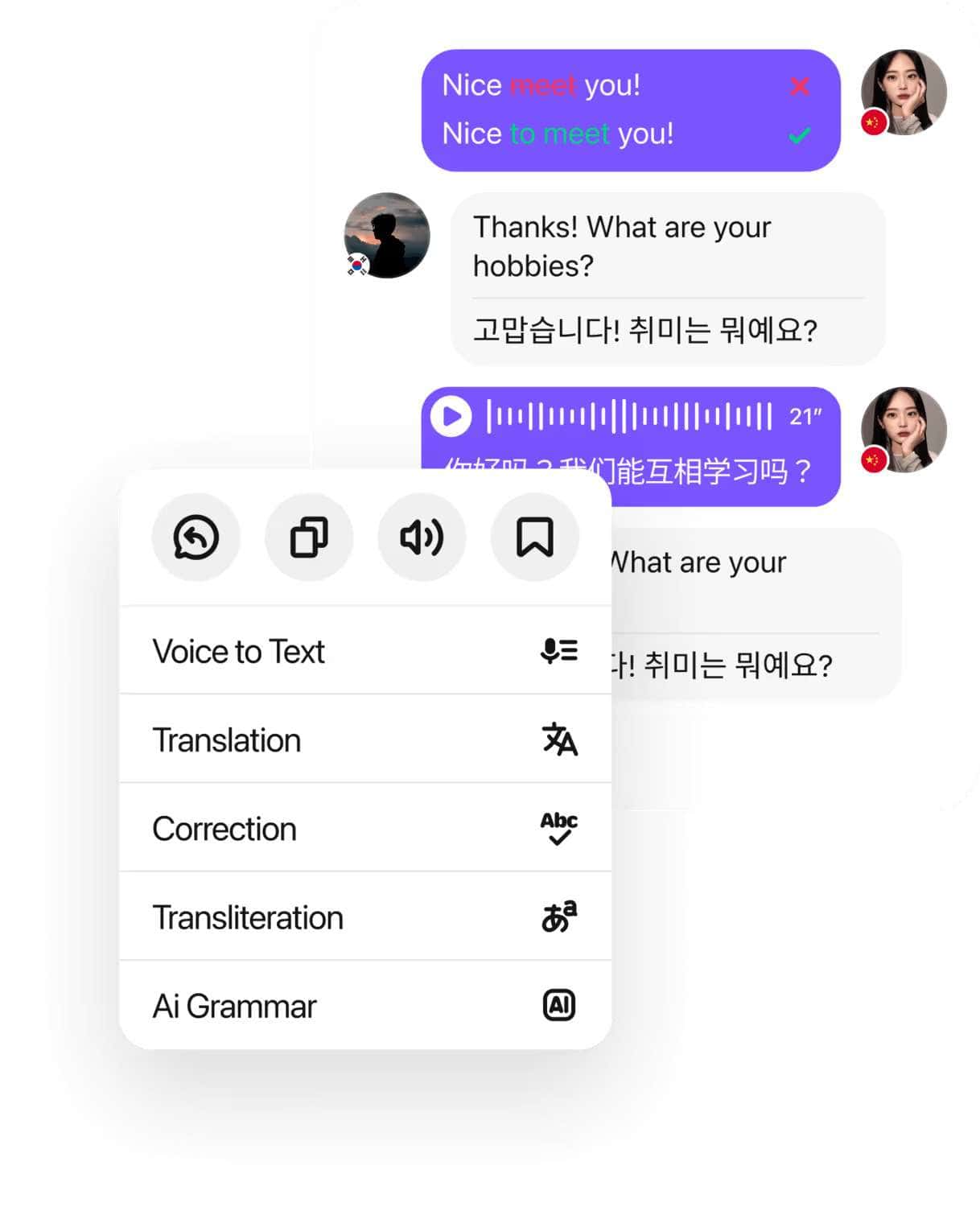
HelloTalk connects learners with native speakers. You can practice through text, voice, video, voice rooms, and other community features.
This helps you use Chinese in real life. You can practice simple topics, greetings, ordering food, campus life, or chatting with Chinese friends.
Best for: speaking practice
Good points: native speaker exchange, voice chat, culture exposure
Limit: not a structured course
Price: Free version available. HelloTalk also has a VIP subscription, but exact prices may vary by country and app store.
Best Websites to Learn Chinese
1. Yoyo Chinese: Best for Pinyin and Tones
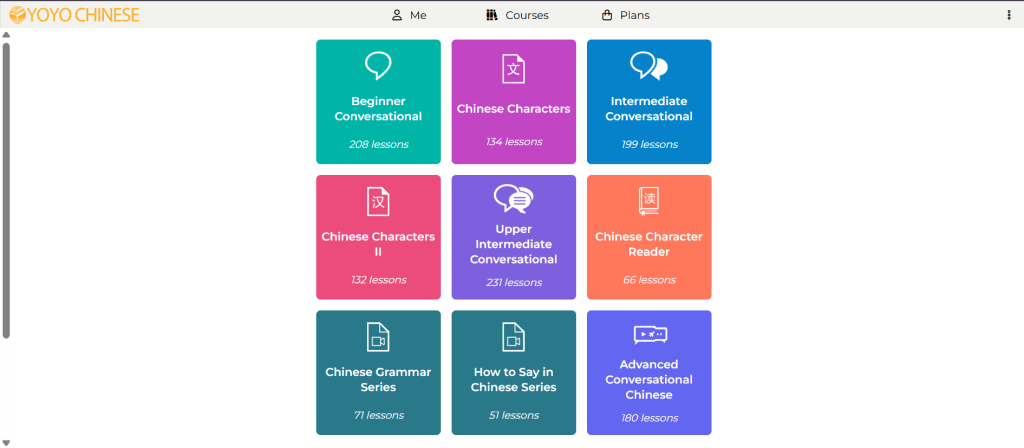
Yoyo Chinese is a strong website for pronunciation. It explains pinyin, tones, and spoken Mandarin clearly.
It also uses video lessons and real-life examples. This helps learners build a better speaking foundation.
Best for: pinyin, tones, and pronunciation
Good points: clear videos, pinyin chart, tone lessons
Limit: full course material may require payment
Price: Free plan available with basic lessons and pinyin tools. Paid plans are available, but prices may change depending on the plan and promotion.
2. Chinese Grammar Wiki: Best for Grammar
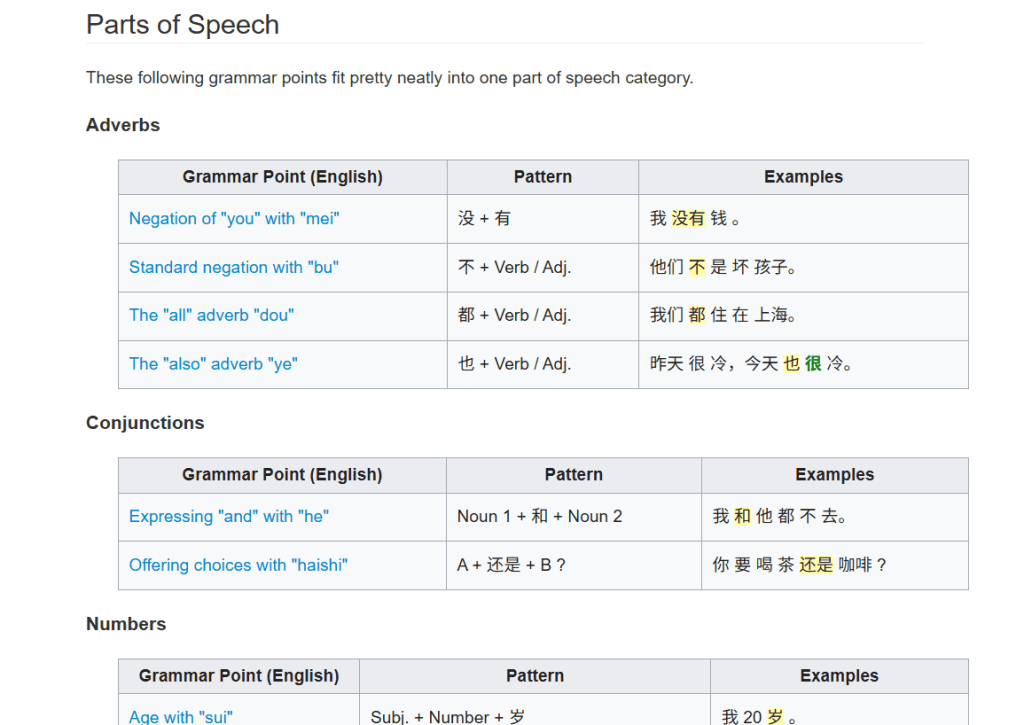
Chinese Grammar Wiki explains grammar by level. You can search beginner, intermediate, and advanced grammar points.
Use it when a sentence pattern feels confusing.
Best for: grammar support
Good points: clear examples, level-based grammar, easy search
Limit: not a full guided course
Price: Free to use online.
3. Coursera Chinese Courses: Best for Structured Lessons

Coursera has Chinese courses from universities and learning providers. Many courses follow a clear weekly structure.
Some courses let learners audit lessons for free. However, certificates usually cost extra.
Best for: structured online study
Good points: university-style lessons, clear modules
Limit: less flexible than mobile apps
Price: Some lessons can be previewed or audited for free. Paid certificates and subscriptions vary by course; Coursera Plus is commonly listed at around USD $59/month or USD $399/year.
4. Mandarin Bean: Best Free Reading Website
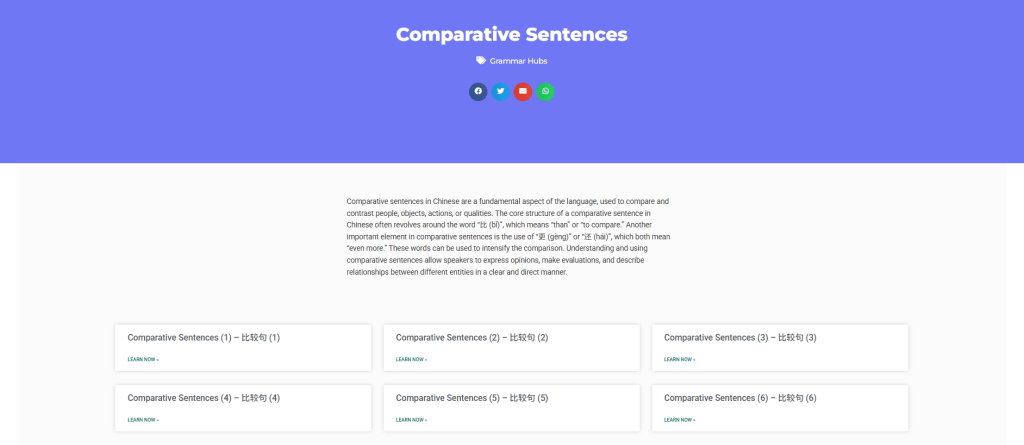
Mandarin Bean offers Chinese reading practice with pinyin, audio, translations, and level labels.
A free Chinese language lesson from this kind of site helps learners build reading skills without paying for a full course.
Best for: free reading practice
Good points: HSK-level texts, audio, pinyin, translations
Limit: more like a reading library than a full course
Price: Free. Mandarin Bean says all graded reading lessons are free to learn and practice.
5. HSK Online Resources: Best for Exam Prep
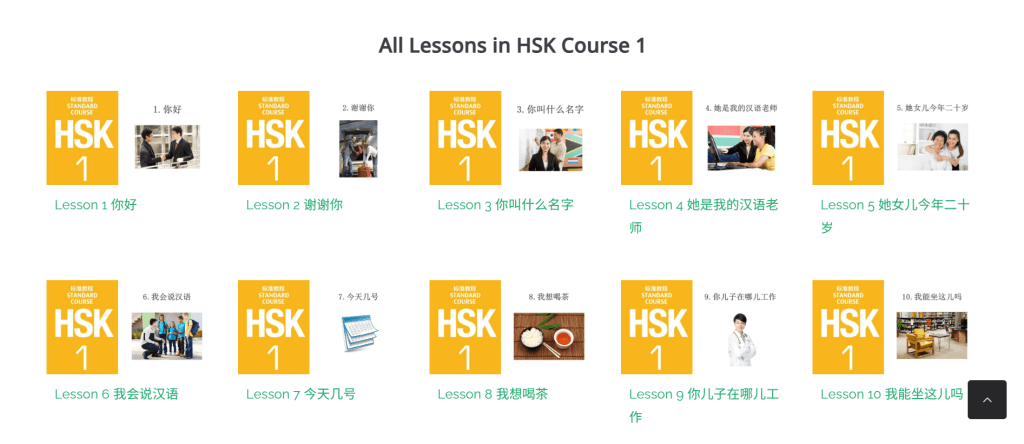
HSK resources help students review words, grammar, listening, and reading by HSK level.
This helps students who plan to apply to Chinese universities or join a Chinese-taught program.
Best for: HSK preparation
Good points: level-based review, test practice, useful word lists
Limit: exam study may feel less natural than daily Chinese
Price: Prices vary by platform. For example, HSKCourse lists premium access at USD $69/year or USD $119 lifetime.
6. ChinesePod: Best for Audio Lessons
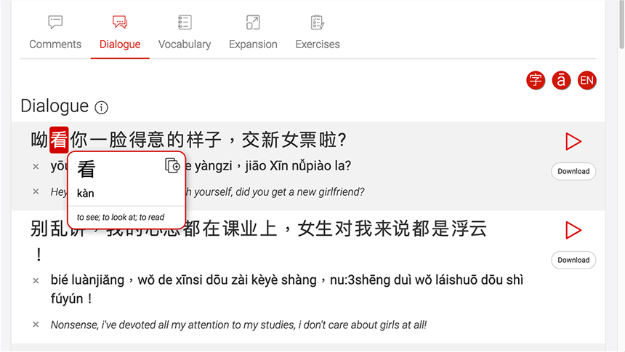
ChinesePod gives learners audio lessons for many levels. It helps with listening, spoken phrases, and daily topics.
For better balance, use it with a reading app or dictionary.
Best for: listening and spoken Chinese
Good points: audio lessons, real-life topics, many levels
Limit: needs another tool for reading and writing
Price: ChinesePod Premium is listed at USD $29/month.
Best Free Chinese Learning Stack
Start with this simple setup:
- Duolingo or ChineseSkill for daily practice
- Pleco for word lookup
- HelloTalk for language exchange
- Du Chinese or Mandarin Bean for reading
- Yoyo Chinese for pinyin and tones
This stack covers apps, websites, speaking, reading, and language and culture.
How to Choose the Right Tool
Use the tool that solves your main problem:
- Need beginner lessons? Try HelloChinese or ChineseSkill.
- Forget words easily? Use Pleco flashcards or spaced repetition.
- Need speaking practice? Use HelloTalk or an online tutor.
- Need reading practice? Use Du Chinese or Mandarin Bean.
- Need character writing? Use Skritter.
- Struggle with tones? Use Yoyo Chinese.
Also choose between simplified and traditional Chinese. Students going to mainland China should usually learn simplified Chinese first.
Why Apps and Websites Are Only the First Step
Apps and websites help you start. They teach words, tones, grammar, and habits.
However, real progress comes when you use Chinese with people. You need to listen, reply, make mistakes, and learn from daily situations.
Many students use apps first, then study in China to improve faster. In China, you can practice Mandarin in class, on campus, in shops, and with local friends.
That daily contact turns Chinese from a study subject into a real communication skill.
Final Thoughts
The best Chinese learning plan is simple. Start small. Practice every day. Use apps for habits, websites for deeper lessons, and language exchange for real speaking.
Then use Chinese in real life. That is where the language starts to feel natural.
Frequently Asked Questions
You can learn Mandarin Chinese with apps like HelloChinese, Duolingo, Pleco, and HelloTalk, plus websites such as Yoyo Chinese and Chinese Grammar Wiki.
The best app depends on your goal. HelloChinese suits beginners, Pleco helps with word lookup, Skritter with character writing, and HelloTalk with speaking practice.
For speaking, try HelloTalk, Preply, or italki. Chinese Grammar Wiki is useful for grammar. HSK-focused resources work well for exam prep. Beginners can start with HelloChinese, ChineseSkill, Yoyo Chinese, or Coursera.
You can find a free Chinese language lesson on Duolingo, ChineseSkill, Mandarin Bean, Loecsen, BBC Chinese, Chinese Grammar Wiki, and some Coursera courses.
Many apps offer free plans. Paid services in this guide are often around USD $12–$15 per month, while tutors usually charge per lesson.
With daily practice, basic conversation may take 3 to 6 months. Stronger fluency usually takes 1 to 2 years or more, especially for speaking, listening, and reading.
Mainland China and Singapore use Simplified Chinese, while Taiwan, Hong Kong, and Macau mainly use Traditional Chinese. Students heading to mainland China should usually learn Simplified Chinese.
Yes. Learning basic pinyin, tones, greetings, numbers, and everyday phrases can make daily life in China easier.
Related Articles You Might Be Interested In
How to Learn Chinese: A Beginner’s Guide to Pinyin & More — very strong match because it covers pinyin, tones, characters, vocabulary, and beginner learning steps. Apply for ChinaWhat Is HSK? Levels & Why They Matter — directly supports the HSK-resource section in the parent article. Apply for ChinaStudy Chinese Language in China — good next-step link for readers who want to move from apps to formal study.How to Say How Are You in Chinese.Chinese vs Japanese Language: Interesting Differences