
Vegetarian food in China
What is one of the best parts of studying or traveling in China? It’s the food, of course! Eating different Chinese foods is like peering through a window into the country’s diverse culture. And for many, the question of “What will I eat every day?” and the idea of navigating a new world of cuisine can feel exciting but also a little intimidating, especially if you’re a vegetarian!
Whether you’re a foodie ready to try new flavors or a cautious eater worried about a new diet, China offers far more variety than you might expect. From campus canteens to local restaurants, there’s always something for everyone, including vegetarians and vegans.
First Impressions: China’s Food Scene
Chinese food in China is nothing like the Chinese takeout you might find in your home country. Sure, you might already be familiar with dumplings, noodles, and fried rice, but the variety of flavors and regional specialties you’ll experience in China is on a whole other level.
At first, you may struggle to acclimate to the local cuisine. Chinese breakfast, for example, is nothing like the sweet American breakfast with donuts, bagels, or sandwiches. Here in China, one of the first breakfast items you’ll be introduced to will be “baozi,” a steamed bun usually filled with pork or vegetables. For those who find it weird to eat savory food for breakfast, you can also opt for “baozi” with sweet fillings, such as black sesame, red bean paste, or custard. No matter where you’re from or what kind of taste buds you have, there is always a “baozi” for everyone.
Each city also has its own must-try dishes:
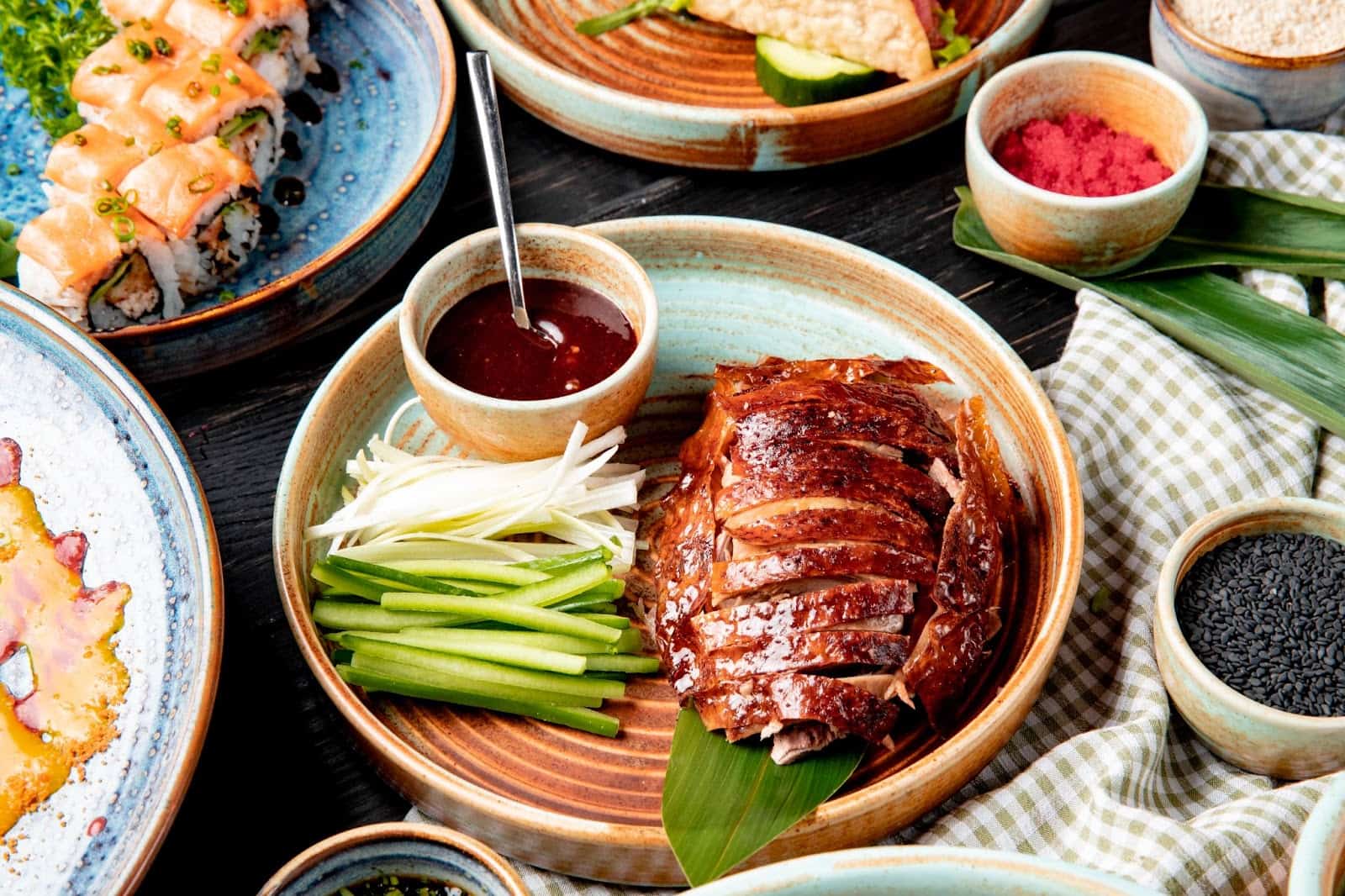
- Beijing – Peking duck with amazingly thin, crisp skin and tasty sauces to complement it.
- Shanghai – “Xiao long bao” dumplings that will fill your mouth with a burst of tasty soup as soon as you bite into them.
- Chengdu – Spicy Sichuan “huo guo” (hot pot) with fresh veggies and meats, as well as flavorful broth.
- Guilin – “Mifen” (rice noodles) served with pickled vegetables, with many different toppings to add according to your preferences.
If you’ve grown up on American-style Chinese food (spring rolls, sweet-and-sour chicken, or pork fried rice), you’ll soon realize that these are just a very small fraction of what Chinese cuisine actually is. You’ll be amazed at how many distinct flavors just one country can offer, and you might even acquire a taste for some of them. Eating Chinese food is like going on an adventure for your taste buds that never ends!
Is Chinese Food Healthy?
Whether or not Chinese food is “healthy” depends on your choices. There are many vegetable dishes with balanced portions of grains and greens. There are also a variety of soups and steamed dishes that use minimal oil. Even street snacks usually incorporate fresh green ingredients, like cucumber salad (pāi huángguā) or spinach with garlic (suànní bōcài).
That said, dishes from Sichuan or Hunan, for example, can be very oily and spicy, which might take your digestive system quite a while to get used to. But don’t worry, the variety of food in campus canteens and local restaurants make it easy to mix and match! You can enjoy an oily deep-fried pork dish one night and a veggie noodle soup the next.
Can You Survive in China as a Vegetarian or Vegan?
Vegetarian food is widely available in China. The mainstays of Chinese cuisine, like noodles, rice, and tofu, are all great for vegetarians. And make no mistake: although people might not be as conscious of vegetarianism compared to the West, vegetarian culture does exist in the country! Many vegetarians in China follow this diet because of Buddhism. In addition, more and more Chinese people who are not vegetarians or vegans also like to eat vegetarian food to keep themselves fit and healthy.
The Buddhist Diet
If you tell a waiter or waitress in a restaurant that you have a Buddhist diet, they will happily introduce plenty of vegetarian dishes to choose from. You can even find restaurants specializing in the Buddhist diet inside or around temples.
The Buddhist diet is based on the concept of ahimsa (non-violence). This means a Buddhist plate will have absolutely zero trace of meat. Some Buddhists even apply the rule of non-violence to plants, so any food harvested by killing a plant is also prohibited (so no root vegetables in your dinner). These include garlic, onion, ginger, and even coriander. If you love these vegetables, then relying on the Buddhist diet for the duration of your stay in China might not be ideal. That said, visiting a Buddhist restaurant at least once is a must-try!

Vegetarian Snacks
You might be surprised, but a lot of street snacks served in China are actually meat-free! The best part? You won’t need to explain your diet to the vendors, and you can stuff yourself silly!
Here are some common meat-free street snacks you can find across the country:
- Yóutiáo (油条 or “deep-fried sticks”) – These are like churros but savory! You can eat them dipped in soy milk.
- Cōng yóu shao bing (葱油饼 or “spring onion oil pancake”) – These pancakes are not fluffy and cakey like the American counterpart. Instead, they are crusty and flat and covered with spring onions.
- Bāozī (包子 or “steamed buns”) – Steamed buns are often filled with meat, but you’ll have absolutely no problem finding ones stuffed with vegetables, sesame, or red bean paste!
- Shāokǎo (烧烤 or “barbecue”) – When you hear “barbecue,” you might immediately think “meat.” But many barbecue stalls in China also sell corn, vegetables, or potatoes on a stick! You can barbecue your favorite veggies over heated charcoal! Yum!
- Chòu dòufu (臭豆腐 or “stinky tofu”) – Stinky tofu is definitely an acquired taste; either you like it or you don’t. It is fermented tofu served with a spicy brown sauce.
- Tánghúlu (糖葫芦 or “sugar-covered hawthorns/fruit”) – This snack has recently gone viral on global social media. Fruits are skewered on a stick and dipped in sugary syrup! The most common fruit you’ll find is strawberry!
Mock Meat in China
The art of making mock meat (vegetarian food that looks, feels, and tastes like meat) actually dates back thousands of years in China. Miàn jīn (面筋, or “dough tendon”) likely originated in ancient China as a meat substitute for Buddhists, or possibly even Chinese emperors who would eat a vegetarian diet at times when meat was scarce.
In major cities like Shanghai or Beijing, you can even find restaurants specializing in mock meat. For example, there is a restaurant called Vegetarian Lifestyle (Zaozi Shu) on Fengxian Road, Shanghai, that sells a variety of mock meat dishes such as kung po “chicken,” which isn’t actually made of chicken.
Tips for Vegetarian Dining in China:
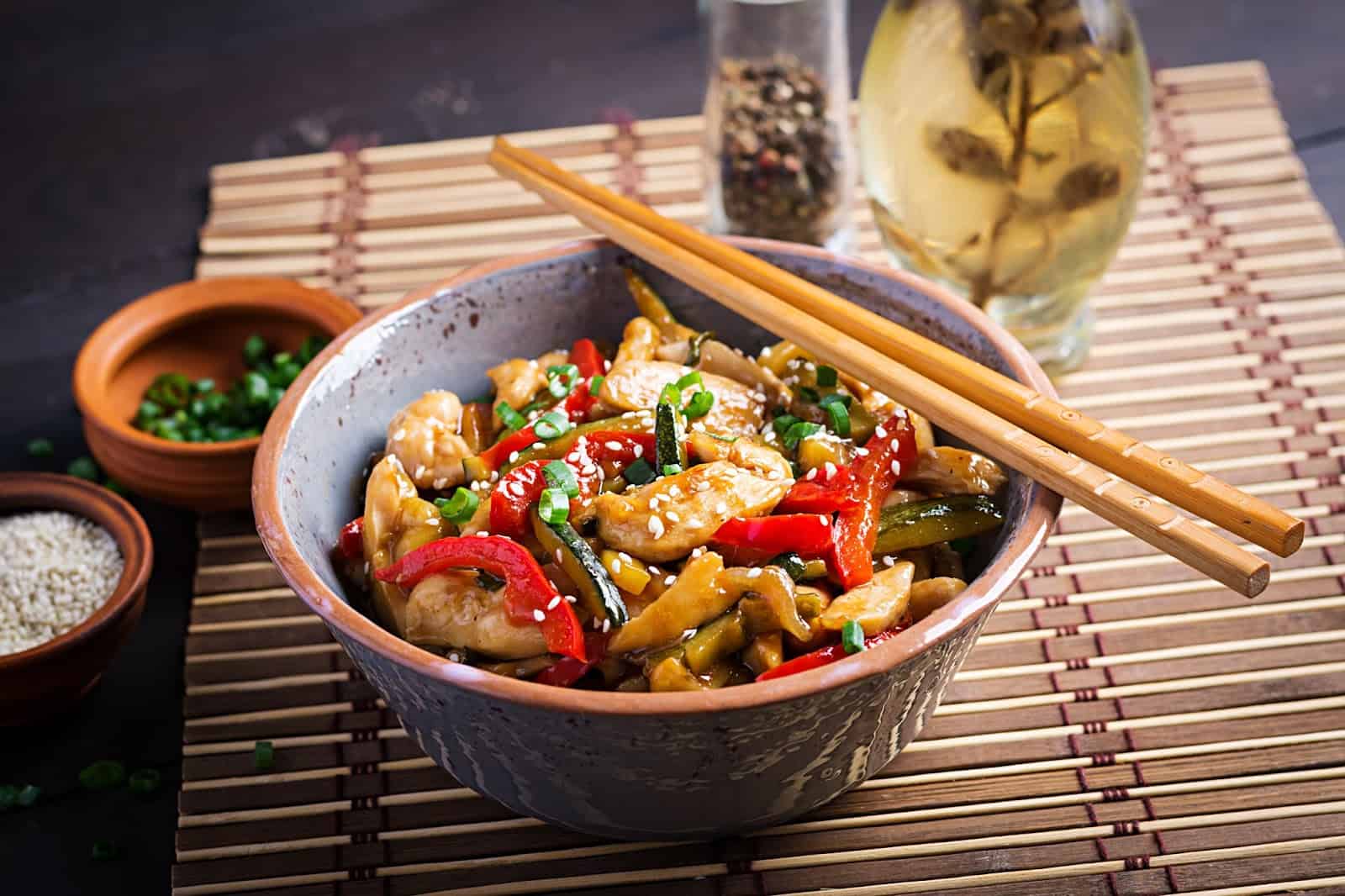
Even if you don’t go to a Buddhist diet or mock meat restaurants, there are many meat-free options for you to choose from, even in regular restaurants! Dishes like braised tofu (红烧豆腐), cold salad (凉菜), grandmother’s potato (老奶洋芋), vegetable dumplings (素饺子), and many more are mostly meat-free!
However, you might still find meat sprinkled on top of your “vegetarian” dish, as meat is often considered a garnish or flavoring. Aside from that, broths, lard, and oyster sauce are common in cooking, so make sure to be clear and specific when ordering. Here are some key phrases you can learn to help you order vegetarian food:
- “I am vegetarian” (Wǒ chīsù / 我吃素)
- “I don’t eat meat” (Wǒ bù chī ròu / 我不吃肉)
- “I am Buddhist” (Wǒ shì fójiàotú / 我是佛教徒)
- “I cannot eat…” (Wǒ bùnéng chī… / 我不能吃…)
Campus Canteens: Affordable and Delicious
If you’re a student, your university canteen might become your favorite place to eat. The food here is cheap and filling, with an endless variety of dishes for you to choose from—often just around 10 RMB for a full meal.
A typical canteen offers:
- Breakfast: Steamed buns (bāozi) with pork, veggies, or tofu; fried pancakes; soy milk.
- Lunch/Dinner: Dumplings, stir-fried rice noodles, fried rice, tofu dishes, and soups.
- Special Counters: Hand-pulled noodles, pasta, or even foreign-style comfort food like cheesy Bolognese.
Vegetarians can look for cài bāozi (vegetable buns), stir-fried greens, or tofu dishes.
Final Thoughts
Adjusting to Chinese food takes time, but it’s one of the most interesting parts of living in China. You’ll discover flavors you didn’t know existed, and maybe even fall in love with dishes you’d never imagined eating.
Vegetarians, don’t worry: with some preparation, you can enjoy China’s food culture to the fullest. Between fresh vegetables, tofu-based dishes, Buddhist food, and campus canteens, you’ll be well-fed and happy.