
How to Choose the Right Chinese University for Your Major?
Choosing where to study in China is one of the most important decisions an international student can make. China has over 2,900 educational institutions, offering a wide range of academic paths for foreign students.
This number creates opportunities. However, it also makes choosing the right study in china university more difficult. This is especially true for students studying in China as a foreigner for the first time.
This guide shows you how to pick a university in China. It looks at academic strength, major fit, city choice, costs, language, and career relevance. Instead of focusing only on studying for free, it emphasizes making the right academic and lifestyle choices. These choices will determine your experience during the academic year and beyond.
Why More International Students Choose to Study in China
Students choose to study in china university programs for reasons that go beyond cost. China offers one of the most diverse higher education systems in the world. This is backed by long-term national education planning.
Key reasons include:
- A wide selection of Bachelor’s, studying in china masters degree, PhD, and non-degree programs
- Strong disciplines in engineering, medicine, business, technology, and language studies
- Large-scale national investment in higher education and research by the ministry of education
- Direct exposure to the economy, innovation systems, and institutions of the people’s republic of china
- Programs taught in both English and Chinese, with structured support for foreign students
Many applicants wonder how to choose a university in China. They want a school that fits their academic and career goals.
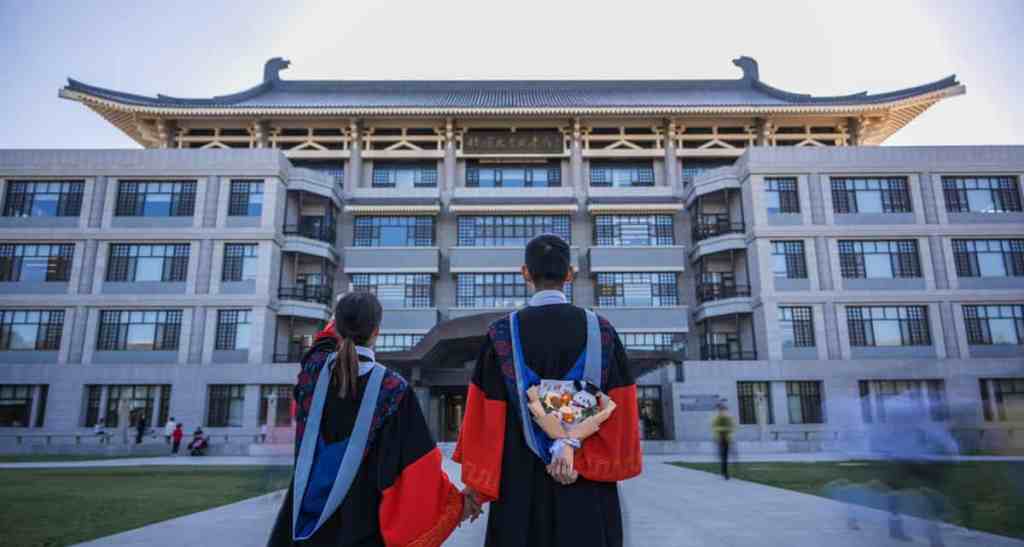
Global Ranking and Reputation: How Much Do Rankings Matter?
University rankings are often the first thing students look at when researching studying in china university options. Rankings can indicate academic quality, but they should not be the only deciding factor.
Major Global Ranking Systems
- QS World University Rankings
- Times Higher Education (THE) World University Rankings
- Academic Ranking of World Universities
China has made significant progress in global rankings, with several educational institutions consistently appearing near the top.
Highly Ranked Universities in China
- Tsinghua University
- Peking University
- Fudan University
- Zhejiang University
- Shanghai Jiao Tong University
Many of these universities participate in national excellence initiatives such as Project 985 and Project 211. They receive strong policy and financial support from the ministry of education of the People’s Republic of China.
Strong Universities Beyond Rankings (Why Overall Ranking Doesn’t Always Matter)
Many universities outside the top global rankings still provide excellent education and strong job prospects. This is especially true for graduate students and foreign students who value program quality more than name recognition.
- Nanjing University
Recognized for academic rigor and strong foundational disciplines. People recognize this city for its strong education and academic culture. It offers serious academics without the high living costs of Beijing or Shanghai. - Xi’an Jiaotong University
A traditional engineering powerhouse with close links to applied research and industry. Particularly strong in engineering and science programs that emphasize project-based learning. - Sichuan University
A large comprehensive university with deep faculty resources, teaching hospitals, and research centers. Its scale provides program stability and broad student support. - Sun Yat-sen University
Located in one of China’s most economically active regions, benefiting from strong industry connections, modern campuses, and growing international collaboration. - Harbin Institute of Technology
Widely respected for engineering and high-level technical research. Attracts students who prioritize discipline reputation and technical depth over overall ranking.
Key takeaway: When choosing a university in China, consider rankings, program strength, location, cost, and career relevance.

Academic Programs and Majors: What’s the Best Major to Study in China?
One of the most common questions students ask is what’s the best major to study in China. The answer depends on China’s strengths as an education and innovation environment.
Popular Majors for International Students — and Why They’re Strong in China
- Business & Economics
China’s role as a global economic power makes it a real-world classroom for finance, trade, and supply chains. Students benefit from proximity to fast-moving markets and Asia-focused business networks. - Engineering & Technology
China leads in infrastructure, manufacturing, telecommunications, green energy, and smart cities. This allows students to gain practical experience alongside theoretical learning. - Medicine (MBBS)
MBBS programs in China are popular because of structured curricula, large teaching hospitals, and extensive clinical exposure. Many programs teach in English, though home-country regulations determine professional recognition. - Chinese Language & Literature
Mandarin is one of the most widely spoken languages globally. Studying language and literature in China offers immersive learning and cultural depth valuable for diplomacy, education, and translation careers. - Computer Science & Artificial Intelligence
China is growing rapidly in AI and big data. Universities benefit from strong funding, research labs, and industry cooperation. - International Relations & Political Science
As China’s global influence grows, studying international relations provides firsthand exposure to Asia-Pacific geopolitics and governance models. - Art & Design
China’s creative industries combine traditional aesthetics with modern design, offering exposure to digital media, animation, architecture, and design festivals.
Rule of thumb: Choose your university major-first, not ranking-first.

Choosing Between Big Cities and Smaller Cities in China
City choice strongly affects daily costs, lifestyle, academic pressure, and career exposure when you study in China.
Major Cities: Beijing and Shanghai
- Beijing
As China’s political and academic center, Beijing offers access to top universities, research institutes, museums, and policy environments. It suits students who thrive in structured and competitive academic settings. - Shanghai
China’s financial hub attracts students interested in business, finance, and international careers. Modern and globally connected, though living costs are generally higher.
Regional and Historical Cities: Balanced Alternatives
- Nanjing
A former capital with a strong academic tradition. It offers quality universities, rich history, and lower living costs compared to tier-one cities. - Xi’an
One of China’s oldest cities, combining cultural heritage with strong engineering and science programs. Offers deeper cultural immersion and lower expenses. - Chengdu, Wuhan, Hangzhou
These cities offer a balance of modern development, strong universities, growing industries, and more affordable living.
How Cost Differences Affect University Choice
- Large cities usually involve higher rent and daily expenses, but offer more internships and networking
- Smaller cities generally provide lower cost of living, easier adaptation, and stronger cultural immersion

Campus Life and Student Support: What to Check
Campus life directly affects how well students adapt during the academic year.
Important factors include:
- Dormitory availability, which simplifies housing
- Student support offices for visas, registration, and health insurance
- International student communities
- Campus security and facilities such as libraries and labs
A well-organized campus significantly reduces stress for new students.
Language and Cultural Environment
Language and culture vary widely between universities.
Most educational institutions offer:
- English-taught degree programs
- Chinese-taught programs with language support
- Preparatory Chinese language courses
Universities with large international populations often have stronger support systems. For example, Peking University and Beijing Language and Culture University are well known for international student services and cultural activities.
Other Factors That Determine Which University You Can Attend in China
When asking what determines which university you can attend in China, students should consider:
- Admission requirements and competitiveness
Competitiveness depends on applicant volume, GPA expectations, language requirements, interviews, portfolios, and limited seats. - Scholarship application timelines
Many Chinese scholarship deadlines close earlier than admissions. This includes the Chinese Government Scholarship. - Application documents and application process
These often include transcripts, diplomas, letters of recommendation, study plans, medical forms, and visa-related paperwork. - Visa requirements
Universities must issue correct documents for visa applications through the Chinese embassy. - City climate and environment
Northern cities can be cold and dry; southern cities can be hot and humid, affecting daily comfort. - Career opportunities after graduation
Cities differ in industry concentration and internship access.
How to Choose the Right University in China: A Practical Framework
When deciding how to choose a university in China, evaluate each option using:
- Major-specific strength
- City and lifestyle fit
- Budget and living costs
- Language of instruction
- Career alignment
Frequently Asked Questions (FAQ)
How do I know what university is right for me?
The right university depends on your major, academic background, budget, preferred city, and career goals.
Is 985 or 211 better?
Project 985 universities usually receive more national funding, but many 211 universities offer excellent programs.
What determines which university you can attend in China?
Admission competitiveness, document quality, language requirements, timing, and visa rules all play a role.
Is studying in China as a foreigner difficult?
It can be challenging at first, but universities with strong international offices make the transition easier.
Are big cities always better for studying in China?
Not necessarily. Large metropolitan areas offer more jobs and internships, while smaller cities have lower costs and easier living.
What are the disadvantages of studying in China?
Possible challenges include language barriers, administrative procedures, and climate differences.
Do I need to speak Chinese to study in China?
Not always. Many programs are English-taught, but learning basic Chinese improves daily life and integration.
Start Your Journey to Study in China Today
Choosing to study in China is a life-changing decision that opens the door to world-class education, cultural diversity, and exciting global opportunities. Whether you’re researching top China universities or preparing your China university application, having a trusted partner can make all the difference. At ApplyForChina, we make the process simple and stress-free. From finding the right university to submitting your application, we’re here to support you every step of the way.