
Chinese Tea Guide: Types, Health Benefits & Cultural Traditions
Tea isn’t just a drink in China—it’s a philosophy, a tradition, and a way of life. For thousands of years, Chinese tea culture has shaped social rituals, influenced medicine, and even played a role in diplomacy. Whether you’re sipping delicate jasmine tea in a Beijing teahouse or brewing a robust Puerh tea cake in Yunnan, every cup tells a story.
In this guide, we’ll explore all about authentic Chinese tea, from different types of Chinese tea to their background stories, even about the benefits of drinking tea, and how you can enjoy tea. Let’s dive in!

The Chinese Way of Drinking Tea
In China, tea is integrated into people’s daily life in ways that might surprise you. And one of the frequently heard phrases when you meet up is “Tea First, Talk Later” (先敬茶, 再说话 xiān jìng chá, zài shuō huà), which can also be understood as offering tea as a sign of respect. More often than not, during business deals, family reunions, and even apologies will often begin with a cup of tea.
The other thing you need to know when you visit your friends’ house as a guest is the rule of “No Empty Cups!” As a guest, you’ll experience the feeling of your friend refilling your cups every so often, because they believe that refilling someone’s tea is being polite. However, if you pay more attention, you’ll realize that they’ll never pour it to the brim, leaving a bit more empty space at most. This is because of the traditional custom never to fill the tea cup full, but pour liquor to the brim (or even overflows) as a sign of respect.
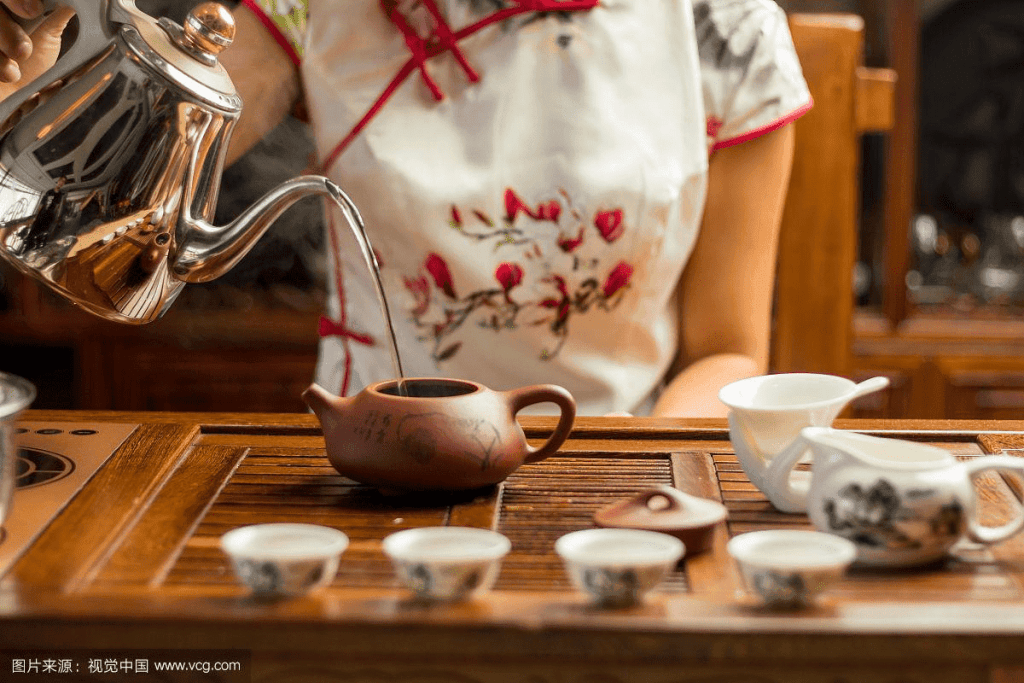
When you meet up in a restaurant, you might notice some people tapping their index and middle fingers on the table to thank the person who refilled their cups. This gesture originates from Emperor Qianlong and signifies “thank you.” The custom dates back to a time when the Emperor went undercover to observe the lives of ordinary people. During this experience, he took the initiative to pour tea for his secret guards. Feeling overwhelmed and unworthy, the guard couldn’t kneel to accept the tea directly. Instead, he tapped his two fingers on the table as a way to represent kneeling.
The 6 Main Types of Chinese Tea & Its Benefit
Chinese teas are classified by fermentation level and processing method, resulting in six main categories:
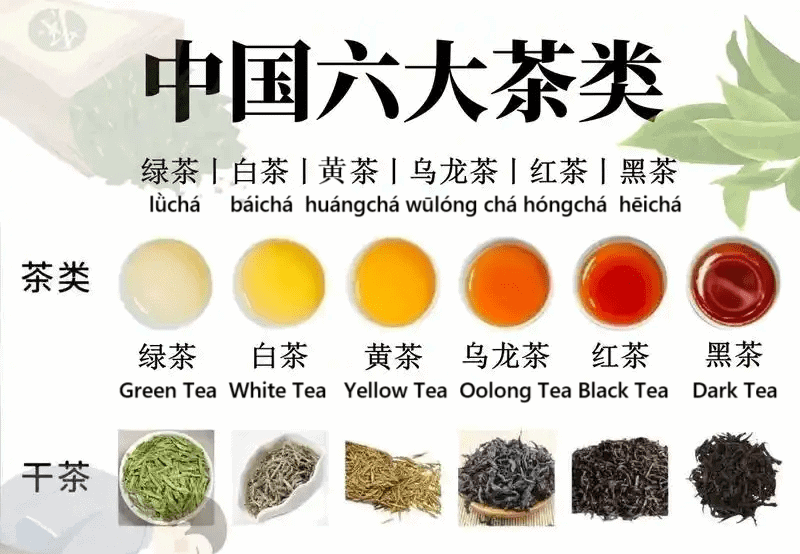
1. Green Tea (绿茶)
The Fresh & Antioxidant Powerhouse
Process: Unfermented, quickly heated to preserve freshness.
Taste: Grassy, light, slightly astringent.
Best For: Detox, weight loss, and staying alert (high in L-theanine).
Famous Varieties:
- Longjing (龙井 Dragon Well) – Flat leaves, chestnut aroma.
- Bi Luo Chun (碧螺春) – Curly leaves with a fruity twist.
2. White Tea (白茶)
The Delicate & Age-Worthy Tea
Process: Minimal processing, just withered and dried.
Taste: Subtle, floral, slightly sweet.
Best For: Skin health, relaxation, and aging like fine wine (older white teas develop honey notes).
Famous Varieties:
- Bai Hao Yin Zhen (白毫银针 Silver Needle) – Made from buds only, luxurious.
- Shou Mei – More robust, with a woody finish.
3. Yellow Tea (黄茶)
The Rare & Mellow Tea
Process: Like green tea but with a slow “smothering” step (闷黄) for a golden hue.
Taste: Smooth, buttery, no bitterness.
Best For: Digestion and rare tea collectors (hard to find outside China!).
Famous Variety:
- Jun Shan Yin Zhen – “Silver Needles” from Hunan, once imperial tribute.
4. Oolong (乌龙茶)
The Complex & Fragrant Tea
Process: Partially oxidized, ranging from 10% to 70%.
Taste: From floral (Tieguanyin) to toasty (Da Hong Pao).
Best For: Metabolism boost, savoring multiple infusions.
Famous Varieties:
- Tieguanyin (铁观音 Iron Goddess) – Orchid aroma, slightly creamy.
- Da Hong Pao (大红袍 Big Red Robe) – Roasty, mineralrich, legendary.
5. Black Tea (红茶)
The Rich & Sweet Tea
Process: Fully oxidized (called “red tea” in China).
Taste: Malty, honeylike, sometimes smoky.
Best For: Heart health, warming up in winter.
Famous Varieties:
- Keemun (祁门红茶) – Winelike depth, a breakfast favorite.
- Lapsang Souchong – Smoked over pine, bold and campfire-esque.
6. Dark Tea (黑茶)
The Fermented & Earthy Tea
Process: Postfermented (微生物发酵), often aged for years.
Taste: Woody, earthy, sometimes medicinal.
Best For: Gut health, lowering cholesterol.
Famous Varieties:
- Puerh (熟普洱) – Can be aged decades, prized like vintage wine.
- Liu Bao (六堡茶) – Earthy, often used in traditional medicine.
The Chinese Tea Ceremony (茶艺 chá yì)
The Chinese Tea ceremony (茶艺 chá yì) isn’t just about drinking tea, it’s a complete set of performance, not only full of respect and elegance, but showing your enjoyment of drinking tea and appreciating the natural flavor.
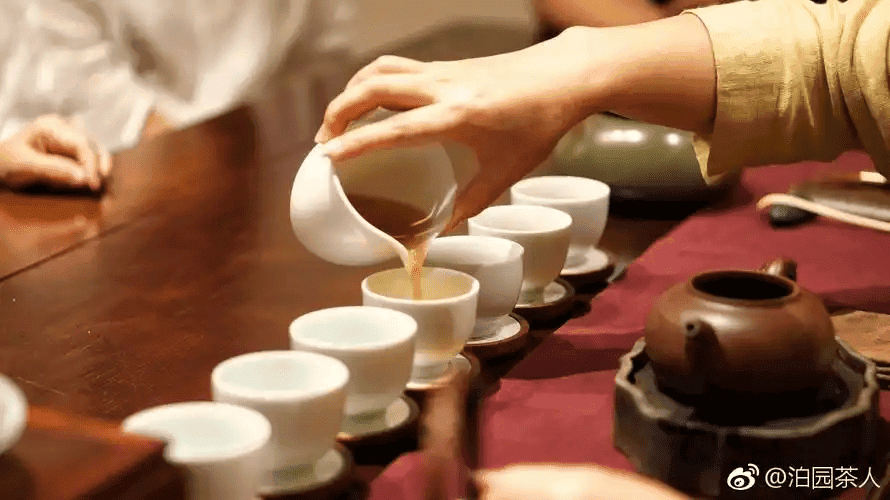
There are actually quite a lot of steps in the Tea Ceremony from preparing the teaware and tea leaves to the final step of drinking them; however, here are some important steps in the Chinese Tea Ceremony:
- Warming the Teaware – Rinsing cups with hot or warm water to disinfect the teaware and enhance the tea leaves later.
- “Awakening the Tea” (洗茶 xǐ chá; lit. rinsing the tea leaves) – A quick rinse to open up the dry tea leaves.
- Multiple Short Steeps – Oolongs and puerhs can be brewed 10+ times before they can be drunk!
- Pouring Rituals – The “high pour” aerates the tea, while a “low pour” preserves heat.
Fun Fact: In Chaozhou, the birthplace of Gongfu tea (功夫茶 gōngfū chá), locals judge a person’s character by how they pour their tea!
Other Ways to Enjoy Chinese Tea
Tea in China is no longer just about traditional ceremonies—today, it’s a vibrant mix of ancient rituals and trendy innovations. Whether you’re sipping a delicate flower tea in a Shanghai teahouse, blending slimming pu-erh at home, or grabbing a bubble tea on the go, there’s a tea style for every mood.
1. Flower & Blooming Teas – A Visual Delight
What Are They? Flower & Blooming Teas are quite popular nowadays; they are hand-tied tea balls that bloom like flowers when steeped. Not only do they look pretty, they also smell nice and their taste is lighter, which are the reasons why many women prefer them rather than the strong, slightly bitter black tea.
They are typically made with green or white tea, often combined with flowers such as jasmine, lily, or chrysanthemum. Their pretty packaging, whether before or after being infused with water, is perfect for an Instagram post! Here are our recommendations for the best flower teas to try:
✔ Jasmine Pearl Tea: Classic, fragrant, and soothing.
✔ Lily Blooming Tea: Unfurls into a stunning lily flower.
✔ Rose Oolong: Floral, romantic, and slightly sweet.
Where to Try in China:
Shanghai: Huxinting Teahouse (湖心亭茶楼) – One of China’s oldest teahouses, famous for its artistic blooming teas.
Beijing: Wuyutai Tea (吴裕泰) – A century-old brand with premium jasmine teas.
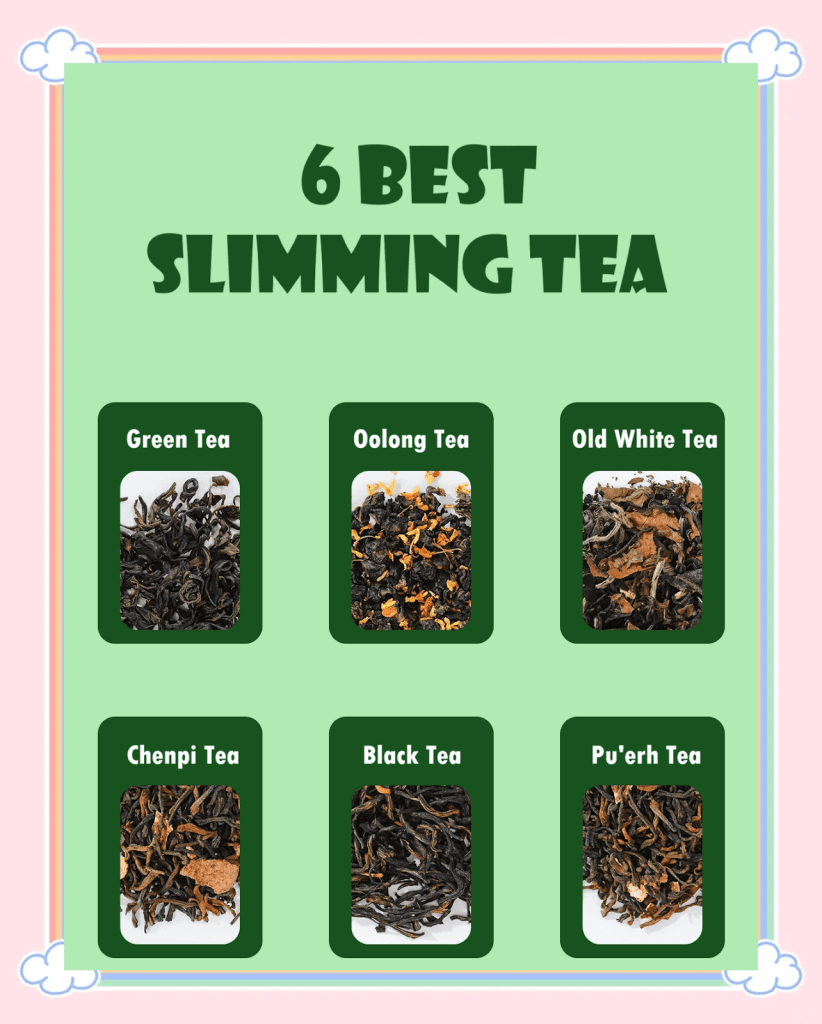
2. Slimming & Wellness Blends – Tea for Health
Why do the Chinese drink tea so much? Tea contains more than just water and tea leaves; it also has lots of benefits, such as for health. For example, Pu-erh tea is believed to cut through grease, which is a perfect drink after hotpot! There is also Oolong tea, which boosts metabolism, and Chrysanthemum tea that cools the body according to the Traditional Chinese Medicine (TCM) philosophy.
Popular Slimming Blends:
✔ “Beautiful Lady Tea” (美人茶) – Rose, goji berry, and chrysanthemum.
✔ Luo Han Guo + Pu-erh – Sweet monk fruit balances earthy tea.
✔ Hawthorn + Green Tea – Aids digestion naturally.
Where to Buy in China:
Tongrentang (同仁堂) – A famous Traditional Chinese Medicine (TCM) pharmacy that sells slimming tea blends.
Online: Taobao 淘宝 & Xiaohongshu 小红书 – Search for “减肥茶” (weight loss tea) for trendy options.
3. Tea Cakes & Aged Pu-erh – The Connoisseur’s Choice
What are tea cakes? Tea cakes are compressed tea (usually pu-erh) into cakes, brick-shaped tea, or bird’s nests for aging. In general, the older the tea and the smoother the compression cakes, the more valuable they are; some even sell for thousands of dollars!
Best Ways to Enjoy:
✔ Break a piece & brew the tea – Earthy, rich, and complex.
✔ Try “raw” Pu’erh (生普洱) vs “ripe” Pu’erh (熟普洱) – Raw is sharper in taste; ripe is more mellow.
Where to Buy in China:
Kunming Tea Markets (昆明茶叶市场) – The best place to buy aged pu-erh.
Dayi Tea (大益茶) – A top Pu-erh brand with chain stores nationwide.

4. Bubble Tea & Modern Twists – The New Tea Culture
Have you ever thought, ‘Why is bubble tea so popular?’ Bubble tea was first invented in Taiwan, but it exploded in mainland China. As one of the countries where tea is consumed daily, many people find this combination refreshing and fitting to their taste, which is why bubble tea has become so popular, and many innovative varieties have emerged since. Other than ‘bubble pearl’, there are endless variations of toppings to choose from, such as cheese foam, fruit tea, and jelly.
Must-Try Modern Tea Drinks:
✔ Classic Milk Tea (珍珠奶茶) – The OG with chewy tapioca pearls.
✔ Cheese Tea (芝士茶) – Sweet & salty cream foam on top.
✔ Fruit Tea (水果茶) – Fresh mango, strawberry, or lychee with green tea.
Best Bubble Tea Chains in China:
✔ Mixue (蜜雪冰城) — Famous for its affordable teas and ice creams.
✔ HeyTea (喜茶) – Famous for cheese tea & seasonal fruit blends.
✔ Nayuki Tea (奈雪的茶) – Trendy fruit teas + soft bread pairings.
✔ Coco (都可) – Affordable classic bubble tea.

Start Your Chinese Tea Journey
Are you interested in trying various Chinese teas? Here are some tips especially designed for you who want to try enjoying classic traditional Chinese tea:
- Begin with green or jasmine tea if you like light flavors.
- Try oolong or black tea if you prefer something richer.
- You might want to explore puerh if you’re feeling adventurous!
In short, there are numerous ways to enjoy your tea. If you’re looking for relaxation, try a blooming flower tea at a quiet teahouse, as it offers a serene experience. For health benefits, sip on pu-erh or slimming blends after meals to aid digestion and support overall well-being. And for a fun outing with friends, grab a bubble tea for a chat.
Just remember that the best tea is the one you enjoy. So grab your cup, heat some water, and let the leaves tell their tale. And, don’t forget to visit ApplyforChina if you want to learn more about Chinese culture and language! We even have free consultation available for you who want to go to China for travel, study, or work!
What’s your favorite Chinese tea? Share in the comments! 🍃