
Bachelor’s Degree
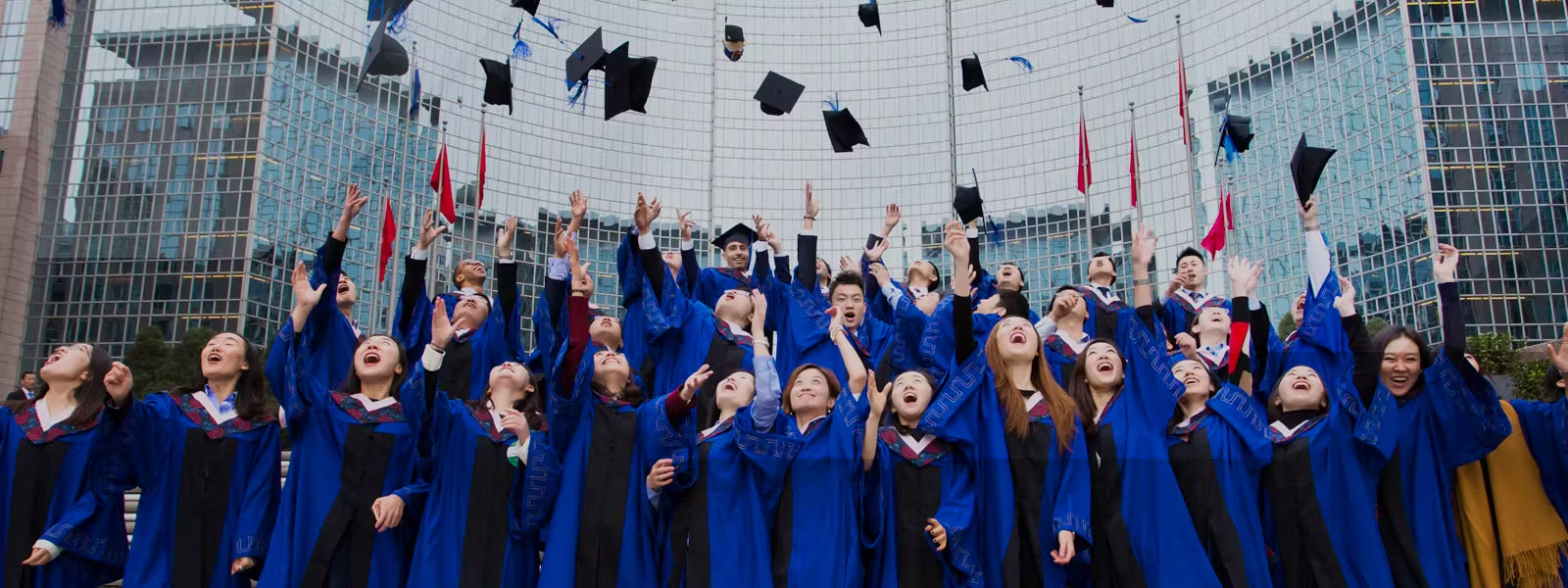
Pursuing a bachelor’s degree in China has become a popular choice for international students looking for affordable, high-quality education.
With an increasing number of programs taught in English, as well as a growing global academic reputation, Chinese universities are now a top destination for students worldwide.
Types of Bachelor’s Programs Offered

Chinese universities offer a wide variety of bachelor’s programs, allowing students to choose from over 3000 universities and colleges.
Many top universities now offer programs taught in English, specifically designed for international students, making it easier to access the curriculum without prior Mandarin knowledge. Popular areas of study include:
- Business & Economics: International Business, Finance, Marketing
- Medicine: MBBS (Bachelor of Medicine, Bachelor of Surgery)
- Information Technology: Computer Science, Data Science, Cybersecurity
Additionally, students have the option to enroll in Chinese-taught programs if they wish to develop fluency in Mandarin, with the HSK test being a common requirement for non-native speakers.
Admission Requirements
Gaining admission to a Chinese university for a bachelor’s program is generally straightforward. Basic eligibility requirements include:
- High school diploma (or equivalent).
- Age limit: Usually 18-25 years old.
- Language proficiency: For English-taught programs, students typically need to submit TOEFL or IELTS scores. For Chinese-taught programs, students must pass the HSK Level 4 or 5 test, depending on the university.
In addition to these general requirements, some universities may ask for letters of recommendation, a personal statement, and proof of any extracurricular achievements.
Tuition Fees and Costs
Studying in China is notably affordable compared to universities in North America, Europe, and other parts of Asia. Tuition fees for bachelor’s programs in China typically range from CNY 14,000 to CNY 56,000 (USD $2000 – USD $8000).
Living costs are also lower, especially in cities outside of Beijing and Shanghai. Monthly expenses (including accommodation, food, and transport) usually range between USD $300 to USD $600, depending on the city.
Scholarships for Bachelor’s Programs
Many scholarships are available for international students applying for bachelor’s programs in China.
These scholarships can either fully cover tuition and living expenses or offer partial funding. The most common scholarships include:
- University-specific scholarships: Each university offers its own merit-based or need-based scholarships.
- Chinese Government Scholarship (CSC): Covers full tuition, accommodation, a monthly stipend, and medical insurance.
- Provincial and city government scholarships: Available for specific universities and regions (e.g., Shanghai, Zhejiang).
To apply for scholarships, students can streamline the process through ApplyForChina, which provides guidance on submitting both university and scholarship applications simultaneously.
Career Opportunities and Internships

A bachelor’s degree from a Chinese university opens up many career paths, both in China and globally. Chinese universities often partner with local and international companies, providing students with valuable internship opportunities in sectors such as engineering, business, and technology.
International graduates are also eligible for the post-study work visa in China, which allows them to gain work experience after completing their studies. Additionally, the Global Career Development Facilitator (GCDF) is aimed at connecting graduates with job opportunities in China.
For those interested in returning to their home country, a degree from a top Chinese university, such as Tsinghua University or Peking University, carries significant global prestige.
Master’s Degree

China’s universities are climbing global rankings. Institutions like Tsinghua University, Peking University, and Fudan University are consistently ranked among the best in the world. Studying for a master’s degree in China provides:
- Global Recognition: Many Chinese universities have partnerships with global institutions, offering recognized degrees.
- Academic Excellence: China’s education system emphasizes research and innovation across a range of disciplines.
- Affordable Costs: Compared to Western universities, tuition and living costs in China are much lower.
Additionally, China’s economic growth is significant. Its influence is increasing in sectors like technology and international trade. These factors make it a prime location to gain academic and professional experience.
Types of Master’s Programs
Chinese universities offer two types of master’s degree programs:
- Taught Programs: These are coursework-based programs like those offered in Western countries, focusing on practical knowledge and skills. Popular programs include MBA, International Business, and Data Science.
- Research-Based Programs: These focus on independent research and are ideal for students looking to pursue academic or specialized career paths. They usually require students to write a thesis under the guidance of a faculty supervisor.
Many master’s programs in China are now offered in English. This allows international students to study without needing to be fluent in Mandarin.
Admission Requirements
Admission to master’s degree programs in China typically requires:
- Bachelor’s degree in a related field from a recognized institution.
- Minimum GPA: Most programs require a GPA of 3.0 or higher, though top universities may have higher standards.
- Age requirement: Most universities require applicants to be under 40 years old at the time of application.
- Language proficiency: For English-taught programs, students typically need to submit IELTS or TOEFL scores. For Chinese-taught programs, HSK Level 4 or 5 is usually required.
- Additional documents: This includes a statement of purpose, letters of recommendation, and a resume/CV. Some research-based programs also require a research proposal.
Programs with competitive admissions may also require interviews or entrance exams.
Program Structure and Duration
Master’s degree programs in China usually last between 2 to 3 years. The structure typically involves:
- Coursework: For the first year or two, students complete required and elective courses. These courses may be taken in conjunction with practical work or research.
- Research/Thesis: Most programs require students to conduct independent research in their final year, culminating in a thesis or dissertation.
- Internships: Many master’s programs, especially in business or technology fields, include internships to help students gain practical experience.
Tuition Fees and Scholarships
One of the key advantages of studying in China is the affordability compared to Western countries. Tuition fees for master’s programs in China typically range from $3,000 USD to $8,000 USD per year.
Living costs vary by city but generally range from $300 to $700 per month for accommodation, food, and transportation.
To help with costs, international students can apply for numerous scholarships:
- Chinese Government Scholarship (CSC): This covers full tuition, accommodation, a monthly stipend, and medical insurance. It’s one of the most competitive and sought-after scholarships for master’s students.
- University-specific scholarships: Many universities offer their own scholarships based on academic performance or financial need.
- Provincial and city scholarships: Available for specific universities and regions (e.g., Shanghai, Zhejiang).
With ApplyForChina, students can get personalized assistance to find and apply for the best scholarships available.
Post-Graduation Opportunities

Graduates of master’s programs in China have excellent career prospects, both in China and globally.
China’s booming economy provides ample opportunities for internships and employment in industries like technology, finance, and international trade. Many multinational companies operate in China, offering internships and jobs for international students.
For students looking to continue their education, Chinese universities offer numerous PhD program opportunities, providing strong funding and research support.
Ph.D. Programs

Pursuing a Ph.D. in China offers several unique advantages:
- Top-Notch Research Opportunities: China has invested heavily in research and development, offering access to state-of-the-art labs, research funding, and partnerships with leading global institutions.
- Affordable Education: Compared to Western universities, the tuition fees for Ph.D. programs in China are significantly lower, and many students are eligible for fully funded scholarships.
- Global Recognition: Leading universities like Tsinghua University, Peking University, and Shanghai Jiao Tong University are globally recognized, with many Ph.D. graduates going on to work in academia, industry, or research worldwide.
China’s Ph.D. programs are ideal for students looking to contribute to fields such as engineering, technology, medicine, environmental science, and international relations.
Types of Ph.D. Programs in China
Ph.D. programs in China are typically research-intensive and offer a range of specializations. The programs can be categorized into:
- Full-Time Ph.D. Programs: These are traditional Ph.D. programs where students conduct in-depth research and attend coursework over 3-4 years.
- Part-Time Ph.D. Programs: These are designed for working professionals who wish to balance their research with career commitments.
- Joint Ph.D. Programs: Many Chinese universities offer joint programs with top universities worldwide, allowing students to conduct part of their research abroad.
Most programs are taught in Chinese, but an increasing number of English-taught Ph.D. programs are available.
Admission Requirements
Admission to Ph.D. programs in China is highly competitive and requires:
- Interview: Some universities require an interview as part of the admissions process, either in person or online.
- Master’s degree in a related field from a recognized institution.
- Age requirement: Applicants are typically required to be under 40 years old at the time of application.
- Language proficiency: For English-taught programs, students need to submit TOEFL or IELTS scores. For Chinese-taught programs, an HSK Level 5 or 6 is often required.
- Research proposal: Ph.D. applicants must submit a detailed research proposal outlining their intended research topic, objectives, and methodology.
- Letters of recommendation: Typically, two or three letters from previous academic supervisors or professors are required.
Program Structure and Duration
Ph.D. programs in China typically last 3 to 4 years, though some students may take up to 5 years to complete their dissertation. The structure generally includes:
- Research: The bulk of the Ph.D. is dedicated to independent research under the guidance of a supervisor.
- Coursework: Some Ph.D. programs require students to complete a certain number of courses, particularly during the first year.
- Dissertation: Students must write and defend a dissertation that presents original research in their chosen field. A successful dissertation defense is required to earn the Ph.D.
Tuition Fees and Scholarships
Ph.D. programs in China are relatively affordable compared to those in other countries, with annual tuition fees ranging from: $3000 USD to $8000 USD per year.
Living expenses, depending on the city, typically range from $300 to $700 per month.
To further reduce costs, many Ph.D. students can apply for scholarships:
- Chinese Government Scholarship (CSC): Covers full tuition, accommodation, a monthly stipend, and health insurance. This is one of the most popular scholarships for Ph.D. candidates in China.
- University Scholarships: Many universities offer merit-based and need-based scholarships specifically for Ph.D. students.
- Provincial and city scholarships: Certain provinces and cities offer additional funding opportunities for international students pursuing doctoral degrees.
Through ApplyForChina, students can receive personalized assistance in applying for these scholarships, ensuring they meet the necessary requirements and deadlines.
Career Opportunities After Graduation

Completing a Ph.D. in China opens doors to a variety of career paths, both in China and internationally. Many graduates pursue academic positions at universities or research institutions, while others find employment in industry, government, or nonprofit organizations.
Ph.D. graduates are also eligible for China’s post-study work visa, which allows them to stay in the country and work after graduation. Many multinational companies in sectors like technology, engineering, and healthcare are actively seeking highly educated professionals.
For those looking to continue in academia, China offers numerous postdoctoral opportunities and research fellowships, further solidifying its role as a global leader in research and innovation.