
17 Chinese Meanings and Symbols
Chinese characters are not just a writing system—they are living works of art, carrying centuries of culture, philosophy, and aesthetics within their strokes. Whether you’re into calligraphy, names with deep meaning, or simply appreciate beautiful scripts, each one of the Chinese characters meaning is worth studying.
Some Chinese characters may appear simple, with just a few strokes; however, they convey deep meanings and provide insights into Chinese cultures and perspectives. Moreover, while some Chinese characters can look complex, they can also become aesthetic works of calligraphy. Once you shift your thinking and understand the meanings behind them, you might discover that Chinese is not that difficult after all. Keep reading to find out more about cool Chinese meanings and symbols!
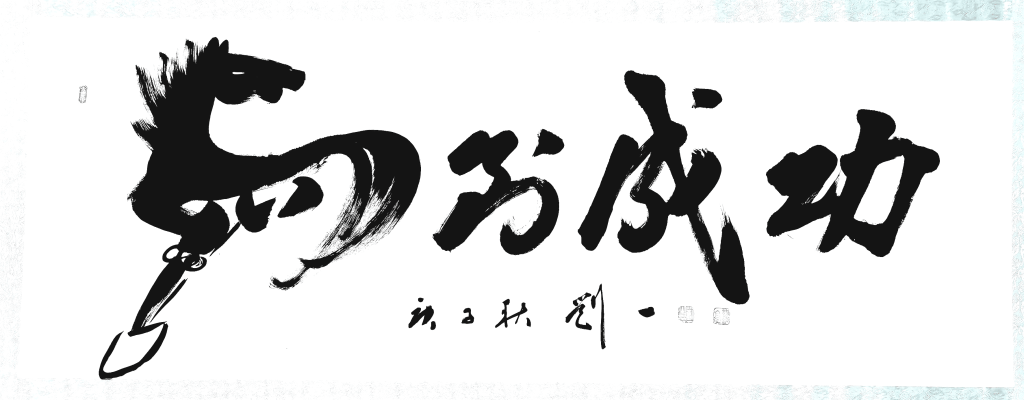
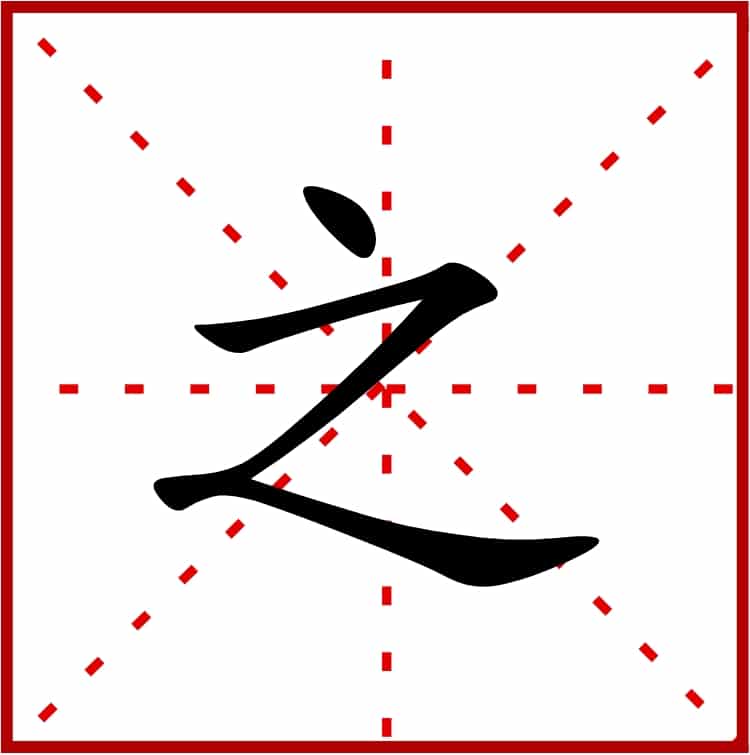
1. 之 (zhī)
Meaning: “之” is a classical particle often meaning “of” or “to”; it symbolizes connection, elegance, and direction.
Explanation: Although this Chinese character only consists only of simple strokes, it looks elegant and minimal. “之” gives a refined, poetic vibe. In addition, it is often used in names to evoke grace and a sense of philosophical flow.
Example:
君子之交淡如水。《庄子·山木》
jūn zǐ zhī jiāo dàn rú shu .《 zhuāng zi · shān mù 》
A gentleman’s friendship is as clear as water.——The Tree on the Mountain by Zhuangzi
2. 道 (dào)
Meaning: It can be literally translated as way or path, but it can also mean principle, which is the core concept in Daoism. Sometimes, the word “道” is translated as “Dao” instead because of its profound meaning.
Explanation: The Chinese character “道” is deeply philosophical; it represents harmony with nature and the flow of the universe.
Example:
道可道,非常道。
dào kě dào , fēi cháng dào.
The Dao that can be spoken is not the eternal Dao.

3. 孝 (xiào)
Meaning: The word “孝” means filial piety; it is a more profound respect for our parents and elders.
Explanation: When looking at the Chinese character “孝,” you will find that it is a combination of the character for “old” (老 lǎo) on top and “child” (子 zǐ) below, symbolizing that our parents and elders, being one generation above us, deserve our respect as those who are younger. Not only is “孝” a key virtue in Confucianism, but it has also been adopted as one of the most important values for Chinese people.
Example:
孝顺父母是中华民族的美德。
xiào shùn fù mǔ shì zhōng huá mín zú de měi dé.
Respecting parents is a virtue of the Chinese people.

4. 家 (jiā)
Meaning: Home, family.
Explanation: Although the Chinese character “家” is simple and often used, it has quite a deep meaning. The character “家” consisted of two characters, which are the pig (豕 shǐ) under a roof (宀 mián). There are many interpretations, but the Chinese character “家” implied that when you have a roof on top of your head, you have a house, and if you can afford to raise a pig as livestock or be responsible for future livelihood, then you can have a family.
Example:
有家的地方,才有真正的归属感。
yǒu jiā de dì fāng , cái yǒu zhēn zhèng de guī shǔ gǎn.
Only where there is a home can one truly feel a sense of belonging.

5. 礼 (lǐ)
Meaning: Ritual, etiquette, propriety.
Explanation: The Chinese character “礼” is a core Confucian virtue; it is more than just a moral concept or custom;it is an expression of respect and gratitude. Gradually, this culture has become the source of a harmonious society.
Example:
夫礼者,自卑而尊人。《礼记》
fū lǐ zhě , zì bēi ér zūn rén.《 lǐ jì 》
Propriety is seen in humbling one’s self and giving honour to others.——The Book of Rites

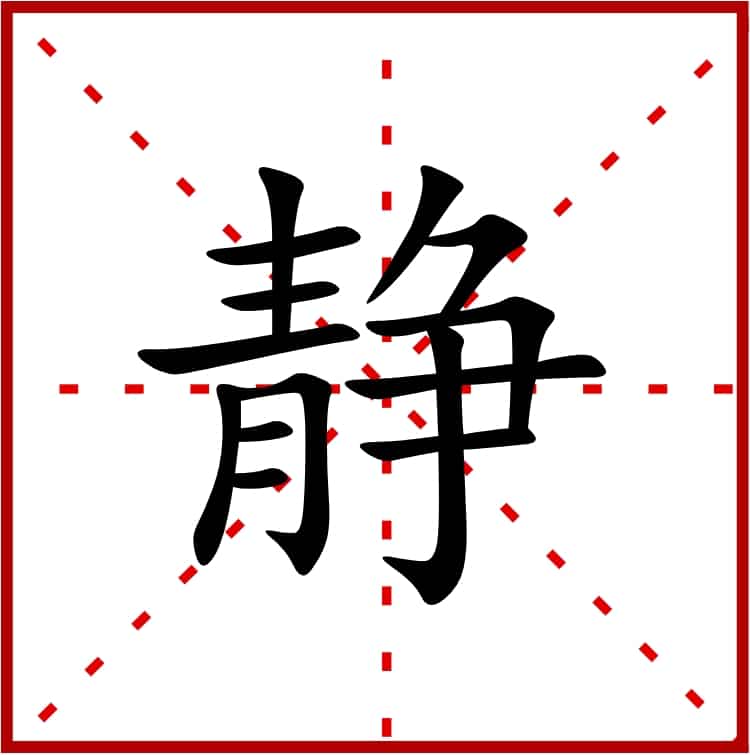
6. 静 (jìng)
Meaning: Quiet, still, peaceful.
Explanation: This Chinese character is the perfect balance of serenity and mindfulness. Moreoever, the word “静” is often seen in poetry and meditation to express peace and calm.
Example:
宁静致远。(成语)
níng jìng zhì yuǎn . (chéng yǔ)
Tranquility leads to transcendence. (A Chinese Idiom)
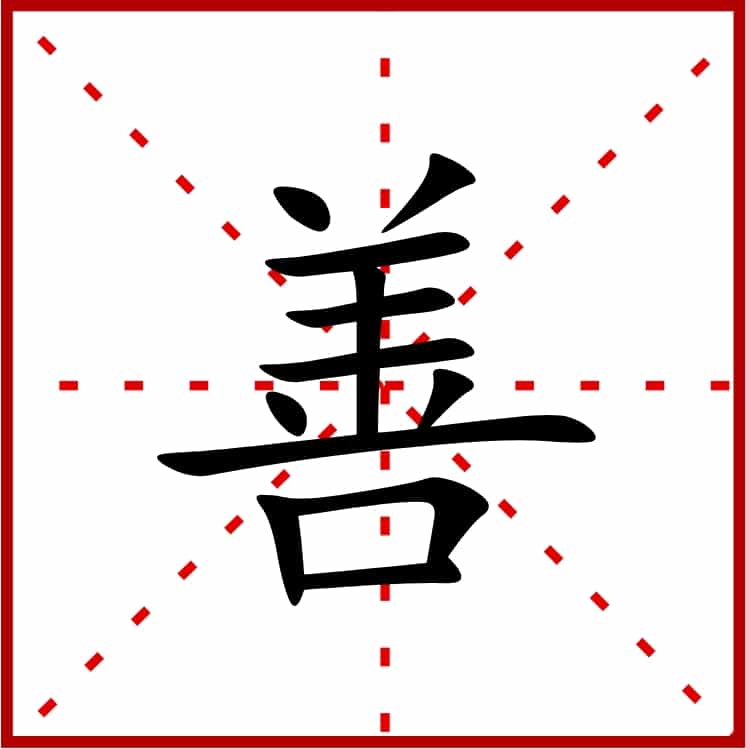
7. 善 (shàn)
Meaning: Goodness, kindness.
Explanation: The Chinese character “善” looks complicated at a glance. But it is actually a combination of the character “word” (言 yán) and “sheep” (羊 yáng), reflecting peaceful speech and gentleness.
Example:
人之初,性本善。——三字经
rén zhī chū , xìng běn shàn.——Sān Zì Jīng
At birth, people are inherently good.——from the Three-Character Classic
8. 墨 (mò)
Meaning: Ink.
Explanation: In ancient China, ink “墨” was one of the four treasures of study (文房四宝 wén fang fáng sì bǎo) originated from the Northern and Southern Dynasty. Besides, in calligraphy, the Chinese character “墨” symbolizes creativity and scholarly life.
Example:
毫墨时洒落,探玄有奇作。——李白《赠参寥子》
háo mò shí sǎ luò , tàn xuán yǒu qí zuò.——Lǐ Bái《zèng cān liáo zi》
The ink and brush often spill in delight, exploring mysteries, wondrous works take flight.— To the Master Canliao by Li Bai

9. 慧 (huì)
Meaning: Wisdom, intelligence.
Explanation: The way the Chinese character “慧” is composed is full of aesthetic and feminine, which is one of the reasons it’s often used in names as it makes it look cool, especially in calligraphy font. Moreover, the character “慧” can also be a reflection of insights or noble aspirations, which make it poetic and refined.
Example:
她聪慧过人,谈吐不凡。
tā cōng huì guò rén , tán tǔ bù fán.
She is remarkably wise and speaks with elegance.

10. 缘 (yuán)
Meaning: Fate, destiny (especially in relationships).
Explanation: Same as the English translation, the Chinese Character “缘” or “destiny” also carries a beautiful idea of serendipity—an invisible thread connecting people.
Example:
有缘千里来相会,无缘对面不相逢。
yǒu yuán qiān lǐ lái xiāng huì , wú yuán duì miàn bù xiāng féng.
Fated people will meet, even if they are a thousand miles apart. If you are not destined to be together, you will not recognize each other, even if you’ve crossed paths.

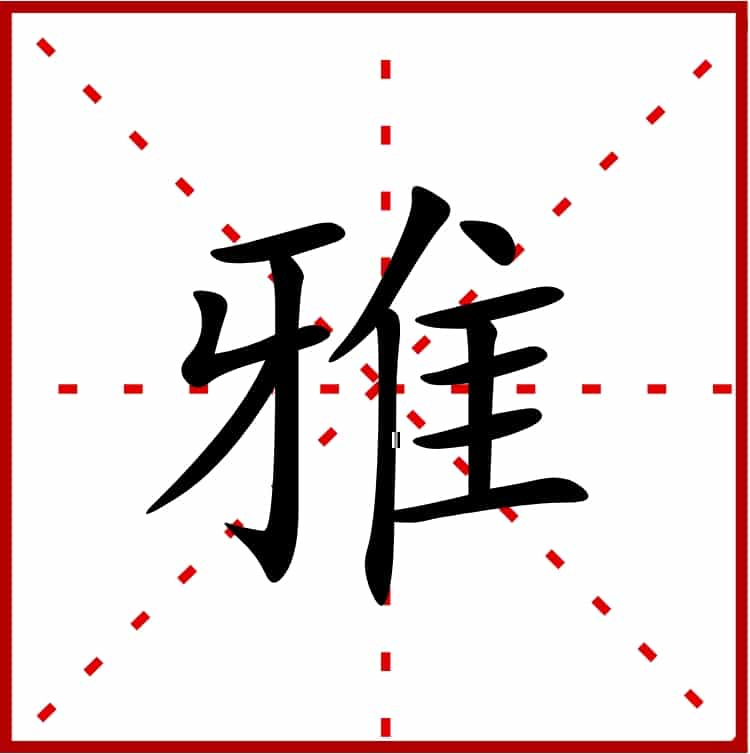
11. 雅 (yǎ)
Meaning: Elegant, refined, and noble.
Explanation: During the Song Dynasty, the classification of songs in the “Book of Songs” were divided into “大雅 dàyǎ” and “小雅xiǎo yǎ”, which shows that the Chinese character “雅” represents grace and sophistication, regardless of era.
Example:
她举止优雅,气质非凡。
tā jǔ zhǐ yōu yǎ , qì zhì fēi fán.
She carries herself with elegance and unique charm.
12. 雨 (yǔ)
Meaning: Rain.
Explanation: The Chinese character “雨” is a simple and fluid character, which is often seen in poetic and romantic contexts.
Example:
好雨知时节,当春乃发生。
hǎo yǔ zhī shí jié , dāng chūn nǎi fā shēng.
随风潜入夜,润物细无声。
suí fēng qián rù yè , rùn wù xì wú shēng.
——杜甫《春夜喜雨》
——Dù Fǔ《 chūn yè xǐ yǔ 》
The good rain knows its season,
When spring arrives, it brings life.
It follows the wind secretly into the night,
And moistens all things softly, without sound.
——Welcome Rain on a Spring Night by Du Fu

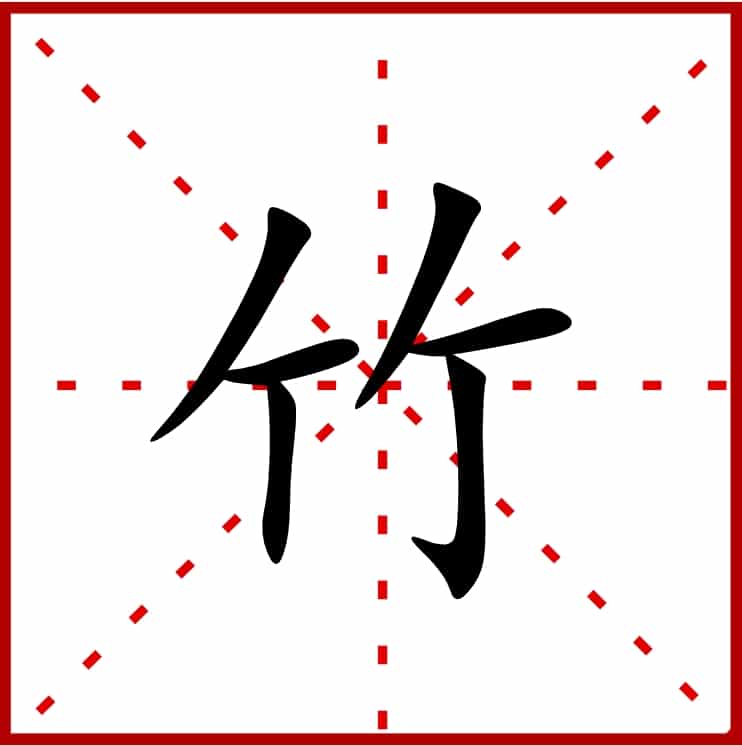
13. 竹 (zhú)
Meaning: Bamboo.
Explanation: Bamboo “竹” is a plant that can be seen anywhere in China. Moreover, it can thrive in any weather, even winter. Therefore, this Chinese character has become a symbol of resilience and integrity in Chinese culture.
Example:
宁可食无肉,不可居无竹。
nìng kě shí wú ròu , bù kě jū wú zhú.
Better to have no meat to eat than live without bamboo.
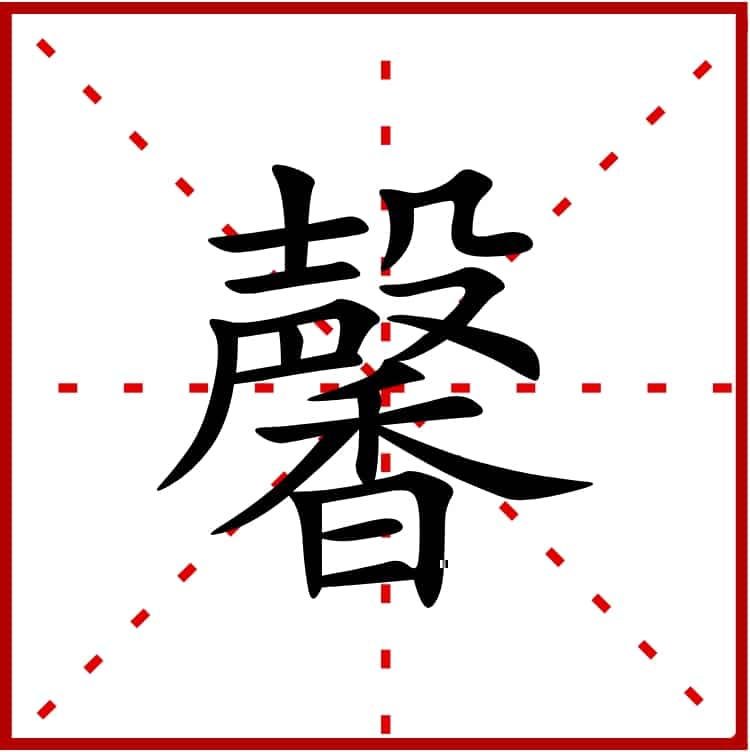
14. 馨 (xīn)
Meaning: Fragrance (especially lasting and elegant scent).
Explanation: The Chinese character “馨” is often used as a female name to suggest that the bearer is a delicate and charming woman.
Example:
合百草兮实庭,建芳馨兮庑门。——屈原《九歌·湘夫人》
hé bǎi cǎo xī shí tíng , jiàn fāng xīn xī wǔ mén.——Qū Yuán《 jiǔ gē · xiāng fū rén 》
The courtyard is full of flowers and grass, and the veranda is filled with lingering fragrance.——Nine Songs – Mrs. Xiang by Qu Yuan
15. 辰 (chén)
Meaning: Star, sun, or moon; celestial time.
Explanation: In ancient times, the Chinese character “辰” generally referred to a celestial or spatial object, which is why, although the character is simple, it evokes cosmic rhythm and mysticism.
Example:
星辰大海,皆可抵达。
xīng chén dà hǎi , jiē kě dǐ dá.
Stars and oceans—all are within reach.

16. 霁 (jì)
Meaning: Clear after rain.
Explanation: This Chinese character is a poetic and rare one symbolizing clarity, hope, and new beginnings. If you pay attention to the details of the character, you can find the character for rain “雨 yǔ” on the top parts and the character for to rise “齐 jī” on the bottom, which is why “霁” means the rain has ceased. When you read the Chinese characters this way, Chinese doesn’t seem to be that hard, does it?
Example:
雨过天霁,万物焕新。
yǔ guò tiān jì , wàn wù huàn xīn.
After the rain, the sky clears and everything is renewed.

17. 澄 (chéng)
Meaning: Clear water; to make things clear.
Explanation: The Chinese character “澄” is often associated with mental clarity and purity of heart. If you look at the structure of the character, there is a radical for water “氵shuǐ” on the left, so it’s no wonder that this word is associated with water. Moreover, Chinese people love to use the word “澄” to describe a river or lake being very clear, almost transparent.
Example:
片月惊心白,澄江搅思深。——伍瑞隆《冬日舟中》
piàn yuè jīng xīn bái , chéng jiāng jiǎo sī shēn.——Wǔ Ruìlóng《 dōng rì zhōu zhōng 》
The moon is hanging up brightly, the clear river stirs my thoughts.——The Boat on Winter Day by Wu Ruilong

Meaningful Chinese Characters
These characters don’t just convey meaning—they embody beauty, depth, and elegance. Whether you’re choosing a name, writing poetry, or simply appreciating Chinese culture, incorporating these aesthetic and unique words into your vocabulary can be both inspiring and satisfying.
After reading through so many interesting Chinese characters, are you interested in learning Chinese or going to study in China? Visit ApplyforChina for more information and get your free consultation!
Do you have a favorite character not listed here? Drop it in the comments below and share its meaning!