
Chinese Application Centre: Study in China Visa Guide
Planning to study in china? One important step is applying for the right China student visa before you travel.
Many students apply through a chinese application centre. It is also called a Chinese Visa Application Service Centre.
In some countries, students submit their visa materials through a visa centre. In other places, they may apply through the Chinese embassy or consulate.
This guide explains:
- What a chinese application centre does
- The difference between X1 and X2 student visas
- How the China student visa process works
- 12 countries with clear official visa support
- Useful tips before visiting the visa centre
- Common mistakes to avoid
- Real student visa FAQs

What Is a Chinese Application Centre?
A chinese application centre helps receive and handle ordinary Chinese visa applications.
It may help you:
- Fill out the form online
- Prepare your documents
- Submit the visa materials
- Pay service fees
- Collect your passport after processing
However, the visa centre does not approve the visa.
The Chinese embassy or consulate makes the final decision. The visa centre only helps with the service process.
So, always use the official visa centre, embassy, or consulate website.
Do Students Need a China Student Visa?
Most international students need a student visa before entering China.
There are two main student visa types: X1 visa and X2 visa.
- X1 Visa
The X1 visa is for students who plan to study in China for more than 180 days.
It is common for:- Bachelor’s programs
- Master’s programs
- PhD programs
- Long-term Chinese language programs
- Long-term exchange programs
- X2 Visa
The X2 visa is for students who plan to study in China for 180 days or less.
It is common for:
The X2 visa is for students who plan to study in China for 180 days or less.
- Short language courses
- Summer schools
- Short exchange programs
- Training programs
If your study period is close to 180 days, ask your university which visa type you should use.
- Other China Visa Types You May See
When preparing to study in china, you may also see other China visa types during your research. These visas are not usually for full-time international students, but it is useful to know the difference.
| Visa Type | Best For |
| X1 Visa | Long-term study in China for more than 180 days. |
| X2 Visa | Short-term study in China for 180 days or less. |
| L Visa | Tourism and short personal travel. |
| Z Visa | Work in China. |
| M Visa | Business and trade visits. |
| F Visa | Exchanges, visits, study tours, and non-commercial activities. |
| S1 Visa | Long-term family visits to foreigners working or studying in China. |
| S2 Visa | Short-term family visits to foreigners working or studying in China. |
Chinese Application Centre vs Embassy
A chinese application centre and a Chinese embassy are not the same.
The centre handles service steps. The embassy or consulate reviews the application.
Here is the simple difference:
- Chinese application centre: receives forms, passports, documents, and service fees.
- Chinese embassy or consulate: reviews the visa application and makes the decision.
- Chinese university: gives you the admission documents.
- Student: prepares documents and submits them on time.
Some visa centres only handle applications from people holding regular passports.
If you hold a diplomatic, official, service, or special passport, you may need to apply through the embassy or consulate.
Basic China Student Visa Process
The process may be different in each country. But most students follow these steps.
- Step 1: Get admitted to a Chinese university
You usually need an official admission letter before applying for a China student visa. - Step 2: Receive your visa documents
For long-term study, students usually need:- Admission Letter
- JW201 or JW202 form
- Step 3: Find the correct visa office
Search for the official chinese application centre, embassy, or consulate in your country. Do not use random visa websites. Choose the official page for your location. - Step 4: Fill out the form
Many students need to complete the online visa form first. Check your details carefully. Your name, passport number, and study dates should match your university documents. - Step 5: Submit the visa materials
Some centres ask you to upload documents online first. Then you visit the centre after approval. You may need:- Passport
- Printed visa form
- Passport photo
- Admission letter
- JW201 or JW202 form
- Proof of legal stay, if applying outside your home country
- Previous Chinese visa, if any
- Step 6: Wait for processing
Processing time depends on the country and season. Some centres offer regular, express, or urgent service. Not all centres offer every option. - Step 7: Check your visa
After collection, check:- Name
- Passport number
- Visa type
- Entry validity
- Number of entries
- Duration of stay
If you find a mistake, contact the visa centre quickly.
12 Countries with Clear Visa Centre Support
Visa rules are not the same everywhere.
Some countries have more official visa centres. Some have clearer online steps. Some provide detailed contact pages and service notices.
This does not mean visa approval is automatic. It only means students can check official information more easily.
Below are 12 useful examples for students preparing to study in China.
- Singapore
Singapore has a clear official visa centre page. Students can check the Chinese Visa Application Service Centre in Singapore for address, office hours, and submission rules. This is useful for students who want a clear and organized process. - Germany
Germany has official visa centre pages, including Berlin. Students in Germany can check the Chinese Visa Application Service Centre in Berlin for office hours and contact details. This helps students choose the correct centre before applying. - United Kingdom
The UK has major visa centres such as London, Manchester, Edinburgh, and Belfast. Students can start with the Chinese Visa Application Service Centre in London. The UK is also useful for searches like “Chinese visa application centre London.” - Canada
Canada has official visa centres such as Toronto and Vancouver. Students can check the Chinese Visa Application Service Centre in Toronto. If you live in Canada but are not a Canadian citizen, check whether you need proof of legal stay. - Australia
Australia has official visa centre pages such as Sydney and Melbourne. Students can check the Chinese Visa Application Service Centre in Sydney. Some centres may offer walk-in service, but rules can change. Always check the latest notice first. - Indonesia
Indonesia has visa centres such as Jakarta and Surabaya. Students can check the Chinese Visa Application Service Centre in Jakarta. This is useful for Indonesian students applying for language, degree, or scholarship programs in China. - Malaysia
Malaysia has an official centre in Kuala Lumpur. Students can check the Chinese Visa Application Service Centre in Kuala Lumpur. The page gives useful details on submission, payment, and passport collection. - Thailand
Thailand has an official visa centre in Bangkok. Students can check the Chinese Visa Application Service Centre in Bangkok. Check local notices before applying, especially during holidays or service changes. - India
India has official centres such as New Delhi, Mumbai, and Kolkata. Students can check the Chinese Visa Application Service Centre in New Delhi. Indian students should prepare documents early, especially for degree programs. - Pakistan
Pakistan has official visa centre pages such as Islamabad, Lahore, and Karachi. Students can check the Chinese Visa Application Service Centre in Islamabad. Many Pakistani students consider China for medicine, engineering, business, and research programs. - Japan
Japan has official centres such as Tokyo, Osaka, and Nagoya. Students can check the Chinese Visa Application Service Centre in Tokyo. Tokyo’s process page is useful because it explains online form and document upload steps. - South Korea
South Korea has official centres such as Seoul and Busan. Students can check the Chinese Visa Application Service Centre in Seoul. This is helpful for students who need to plan around university registration dates.
Use Official Visa Websites Only
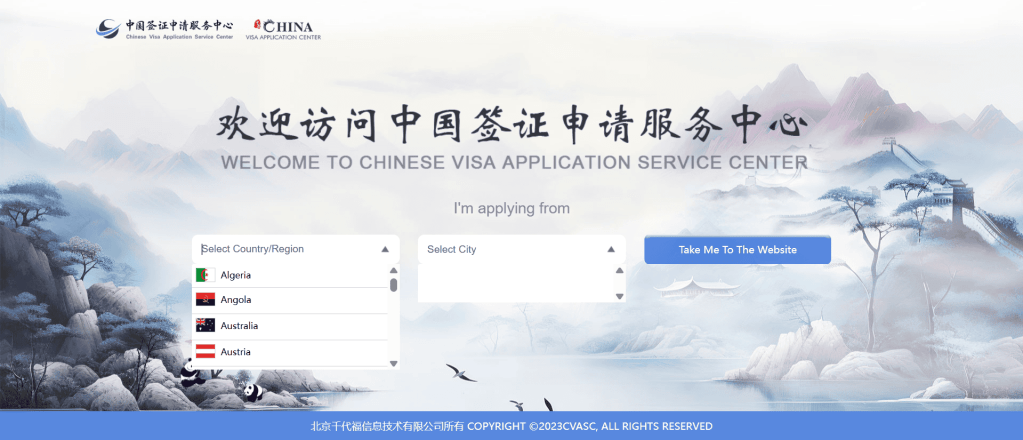
When applying for a China student visa, use official sources.
Do not trust websites that promise:
- Guaranteed visa approval
- No-document visa applications
- Fake admission letters
- Faster approval without official service
- Unclear payment requests
Use official pages from:
- Chinese Visa Application Service Centre
- Chinese embassy (usually ends with china-embassy.gov.cn)
- Chinese consulate (usually ends with china-consulate.gov.cn)
- Your Chinese university
This protects your passport, money, and personal data.
Documents You May Need for a China Student Visa

Requirements can vary by country. But students usually need:
- Valid passport
- Completed visa application form
- Recent passport photo
- Admission Letter from a Chinese University
- JW201 or JW202 form for long-term study
- Proof of legal stay, if applying outside your home country
- Previous Chinese visa or residence permit, if any
- Extra documents required by the local office
Do not rely only on a general online checklist.
Before submission, check the official chinese application centre page for your country.
Practical Tips Before Visiting the Chinese Application Centre
- Check if online approval is needed
Some centres ask students to complete online steps first.
Before you visit, check:- Do I need to fill out the form online?
- Do I need to upload documents?
- Do I need online approval?
- Do I need an appointment?
- Can I walk in?
- Choose the correct centre
Do not choose a centre only because it appears first on Google.
Choose the centre that serves your city, country, or residence area. - Check your passport early
Before applying, check:- Passport validity
- Blank visa pages
- Passport condition
- Name spelling
If your passport will expire soon, renew it first.
- Apply early
Do not leave your visa until the final week. A safer timeline is:- 3 months before travel: check passport and visa rules
- 2 months before travel: prepare admission documents
- 4–6 weeks before travel: submit your visa application
- After visa approval: confirm flights and arrival plans
- Match your visa type with your study length
Use the X1 visa for study longer than 180 days.
Use the X2 visa for study of 180 days or less.
If you are unsure, ask your university. - Prepare proof of legal stay
This matters if you apply outside your home country.- Residence permit
- Student visa
- Work visa
- Valid stay document
- Check holiday notices
Visa centres may close during local or Chinese public holidays.
Before booking flights, check:- Centre holidays
- Collection hours
- Processing time
- Peak application periods
- University registration date
- Keep your university updated
If your visa is delayed, contact your university early.
They may help with:- Late registration
- Dormitory check-in
- Health check steps
- Residence permit guidance
Common Mistakes to Avoid
- Mistake 1: Applying before admission
You usually need an admission letterbefore applying for a student visa.
For long-term study, you may also need the JW201 or JW202 form. - Mistake 2: Choosing the wrong centre
Use the official centre for your location. Do not use random visa websites. - Mistake 3: Choosing the wrong visa type
Using the wrong visa type may delay your application.- X1 is for long-term study.
- X2 is for short-term study.
- Mistake 4: Forgetting the JW form
Long-term students usually need the JW201 or JW202 form.
If you have not received it, ask your university first. - Mistake 5: Using different names
Small spelling differences can cause problems.
Your name should match on:- Passport
- Admission letter
- JW form
- Visa form
- University application documents
- Mistake 6: Booking flights too early
Wait for your visa approval before booking non-refundable flights.
If you need to book early, choose flexible tickets. - Mistake 7: Ignoring local rules
Each country may have different steps.
Always check the local visa centre page before visiting.
What Happens After You Arrive in China?
For X1 students, getting the visa is not the final step.
After entering China, you usually need to:
- Register at your university
- Complete health check steps
- Register your housing
- Apply for a residence permit
The residence permit allows long-term students to stay in China during their study period.
Your university’s international student office will guide you.
How ApplyForChina Can Help Before the Visa Stage
A smooth visa process starts before you visit the visa centre.
Before applying for a visa, you need the right university, program, and admission documents.
ApplyForChina can help students with:
- Choosing Chinese universities
- Comparing English-taught and Chinese-taught programs
- Preparing application documents
- Understanding scholarships
- Planning the application timeline
- Getting ready for the visa stage
If your goal is to study in china, start with the university application first.
The visa step becomes easier when your admission documents are complete.
Final Checklist Before You Submit
Before visiting the chinese application centre, check:
- Did I choose the correct centre?
- Did I fill out the form correctly?
- Did I print the required pages?
- Is my passport valid?
- Do I have blank visa pages?
- Do I have my admission letter?
- Do I need a JW201 or JW202 form?
- Does my name match on every document?
- Do I need proof of legal stay?
- Did I check holidays and opening hours?
- Do I need an appointment?
- Do I need online approval first?
If you answer yes to these questions, your application should be much smoother.
FAQs About Chinese Application Centre and China Student Visa
It depends on your study length.
For an X1 visa, you usually need both the admission letter and the JW201 or JW202 form.
For an X2 visa, the admission letter may be enough. Check your local visa office rules before applying.
Sometimes, yes. But you may need proof of legal stay in that country. This can be a residence permit, student visa, work visa, or other valid stay document.
Check the local chinese application centre before applying.
Choose the centre that serves your residence area. Do not choose a centre only because it is more famous. Check the official local instructions first.
A visa agency may help prepare documents. But you should still check the official visa centre, embassy, or consulate website yourself. This helps you avoid wrong forms, fake fees, and outdated rules.
For a real study program, you should apply for the correct student visa.
Visa-free entry is usually for short visits. It is not the safest choice for degree programs or long-term language study.
X2 is usually for 180 days or less. X1 is for more than 180 days.
If your program is exactly 180 days, ask your university which visa type your documents support.
It means you may need to finish online steps before visiting the centre. You may need to:
Create an account, fill out the form, upload documents, wait for online review, and submit your passport after approval
It is safer to wait.
Visa processing may take longer during holidays or peak seasons. If you must book early, choose flexible tickets.
Register at your university first. Then follow the school’s steps for health check, housing registration, and residence permit application.
Follow the visa centre for visa submission.
Follow your university for admission, registration, and residence permit steps.
If the instructions conflict, contact both sides before submitting your documents.
Related Articles You Might Be Interested In
- Study Abroad in China: 2026 Guide for International Students
- China Student Visa X1 & X2: Differences and Application Guide
- Photo China Visa Requirements | Apply For China
- 2026 China Visa & Residence Guide for Foreigners
- China 2026 Entry & Stay Guide for Foreigners
- Is it Safe to Study in China in 2026?
Chinese Application Centre: Study in China Visa Guide
Planning to study in china? One important step is applying for the right China student visa before you travel.
Many students apply through a chinese application centre. It is also called a Chinese Visa Application Service Centre.
In some countries, students submit their visa materials through a visa centre. In other places, they may apply through the Chinese embassy or consulate.
This guide explains:
- What a chinese application centre does
- The difference between X1 and X2 student visas
- How the China student visa process works
- 12 countries with clear official visa support
- Useful tips before visiting the visa centre
- Common mistakes to avoid
- Real student visa FAQs

- Chinese Application Centre: Study in China Visa Guide
- What Is a Chinese Application Centre?
- Do Students Need a China Student Visa?
- Chinese Application Centre vs Embassy
- Basic China Student Visa Process
- 12 Countries with Clear Visa Centre Support
- Use Official Visa Websites Only
- Documents You May Need for a China Student Visa
- Practical Tips Before Visiting the Chinese Application Centre
- Common Mistakes to Avoid
- What Happens After You Arrive in China?
- How ApplyForChina Can Help Before the Visa Stage
- Final Checklist Before You Submit
- FAQs About Chinese Application Centre and China Student Visa
- Related Articles You Might Be Interested In
- Chinese Application Centre: Study in China Visa Guide
- What Is a Chinese Application Centre?
- Do Students Need a China Student Visa?
- Chinese Application Centre vs Embassy
- Basic China Student Visa Process
- 12 Countries with Clear Visa Centre Support
- Use Official Visa Websites Only
- Documents You May Need for a China Student Visa
- Practical Tips Before Visiting the Chinese Application Centre
- Common Mistakes to Avoid
- What Happens After You Arrive in China?
- How ApplyForChina Can Help Before the Visa Stage
- Final Checklist Before You Submit
- FAQs About Chinese Application Centre and China Student Visa
- Related Articles You Might Be Interested In
What Is a Chinese Application Centre?
A chinese application centre helps receive and handle ordinary Chinese visa applications.
It may help you:
- Fill out the form online
- Prepare your documents
- Submit the visa materials
- Pay service fees
- Collect your passport after processing
However, the visa centre does not approve the visa.
The Chinese embassy or consulate makes the final decision. The visa centre only helps with the service process.
So, always use the official visa centre, embassy, or consulate website.
Do Students Need a China Student Visa?
Most international students need a student visa before entering China.
There are two main student visa types: X1 visa and X2 visa.
- X1 Visa
- Bachelor’s programs
- Master’s programs
- PhD programs
- Long-term Chinese language programs
- Long-term exchange programs
- X2 Visa
- Short language courses
- Summer schools
- Short exchange programs
- Training programs
- Other China Visa Types You May See
When preparing to study in china, you may also see other China visa types during your research. These visas are not usually for full-time international students, but it is useful to know the difference.
| Visa Type | Best For |
| X1 Visa | Long-term study in China for more than 180 days. |
| X2 Visa | Short-term study in China for 180 days or less. |
| L Visa | Tourism and short personal travel. |
| Z Visa | Work in China. |
| M Visa | Business and trade visits. |
| F Visa | Exchanges, visits, study tours, and non-commercial activities. |
| S1 Visa | Long-term family visits to foreigners working or studying in China. |
| S2 Visa | Short-term family visits to foreigners working or studying in China. |
Chinese Application Centre vs Embassy
A chinese application centre and a Chinese embassy are not the same.
The centre handles service steps. The embassy or consulate reviews the application.
Here is the simple difference:
- Chinese application centre: receives forms, passports, documents, and service fees.
- Chinese embassy or consulate: reviews the visa application and makes the decision.
- Chinese university: gives you the admission documents.
- Student: prepares documents and submits them on time.
Some visa centres only handle applications from people holding regular passports.
If you hold a diplomatic, official, service, or special passport, you may need to apply through the embassy or consulate.
Basic China Student Visa Process
The process may be different in each country. But most students follow these steps.
- Step 1: Get admitted to a Chinese university You usually need an official admission letter before applying for a China student visa.
- Step 2: Receive your visa documents For long-term study, students usually need:
- Admission Letter
- JW201 or JW202 form
- Step 3: Find the correct visa office Search for the official chinese application centre, embassy, or consulate in your country. Do not use random visa websites. Choose the official page for your location.
- Step 4: Fill out the form Many students need to complete the online visa form first. Check your details carefully. Your name, passport number, and study dates should match your university documents.
- Step 5: Submit the visa materials Some centres ask you to upload documents online first. Then you visit the centre after approval. You may need:
- Passport
- Printed visa form
- Passport photo
- Admission letter
- JW201 or JW202 form
- Proof of legal stay, if applying outside your home country
- Previous Chinese visa, if any
- Step 6: Wait for processing Processing time depends on the country and season. Some centres offer regular, express, or urgent service. Not all centres offer every option.
- Step 7: Check your visa After collection, check:
- Name
- Passport number
- Visa type
- Entry validity
- Number of entries
- Duration of stay
12 Countries with Clear Visa Centre Support
Visa rules are not the same everywhere.
Some countries have more official visa centres. Some have clearer online steps. Some provide detailed contact pages and service notices.
This does not mean visa approval is automatic. It only means students can check official information more easily.
Below are 12 useful examples for students preparing to study in China.
- Singapore Singapore has a clear official visa centre page. Students can check the Chinese Visa Application Service Centre in Singapore for address, office hours, and submission rules. This is useful for students who want a clear and organized process.
- Germany Germany has official visa centre pages, including Berlin. Students in Germany can check the Chinese Visa Application Service Centre in Berlin for office hours and contact details. This helps students choose the correct centre before applying.
- United Kingdom The UK has major visa centres such as London, Manchester, Edinburgh, and Belfast. Students can start with the Chinese Visa Application Service Centre in London. The UK is also useful for searches like “Chinese visa application centre London.”
- Canada Canada has official visa centres such as Toronto and Vancouver. Students can check the Chinese Visa Application Service Centre in Toronto. If you live in Canada but are not a Canadian citizen, check whether you need proof of legal stay.
- Australia Australia has official visa centre pages such as Sydney and Melbourne. Students can check the Chinese Visa Application Service Centre in Sydney. Some centres may offer walk-in service, but rules can change. Always check the latest notice first.
- Indonesia Indonesia has visa centres such as Jakarta and Surabaya. Students can check the Chinese Visa Application Service Centre in Jakarta. This is useful for Indonesian students applying for language, degree, or scholarship programs in China.
- Malaysia Malaysia has an official centre in Kuala Lumpur. Students can check the Chinese Visa Application Service Centre in Kuala Lumpur. The page gives useful details on submission, payment, and passport collection.
- Thailand Thailand has an official visa centre in Bangkok. Students can check the Chinese Visa Application Service Centre in Bangkok. Check local notices before applying, especially during holidays or service changes.
- India India has official centres such as New Delhi, Mumbai, and Kolkata. Students can check the Chinese Visa Application Service Centre in New Delhi. Indian students should prepare documents early, especially for degree programs.
- Pakistan Pakistan has official visa centre pages such as Islamabad, Lahore, and Karachi. Students can check the Chinese Visa Application Service Centre in Islamabad. Many Pakistani students consider China for medicine, engineering, business, and research programs.
- Japan Japan has official centres such as Tokyo, Osaka, and Nagoya. Students can check the Chinese Visa Application Service Centre in Tokyo. Tokyo’s process page is useful because it explains online form and document upload steps.
- South Korea South Korea has official centres such as Seoul and Busan. Students can check the Chinese Visa Application Service Centre in Seoul. This is helpful for students who need to plan around university registration dates.
Use Official Visa Websites Only

When applying for a China student visa, use official sources.
Do not trust websites that promise:
- Guaranteed visa approval
- No-document visa applications
- Fake admission letters
- Faster approval without official service
- Unclear payment requests
Use official pages from:
- Chinese Visa Application Service Centre
- Chinese embassy (usually ends with china-embassy.gov.cn)
- Chinese consulate (usually ends with china-consulate.gov.cn)
- Your Chinese university
This protects your passport, money, and personal data.
Documents You May Need for a China Student Visa
Requirements can vary by country. But students usually need:
- Valid passport
- Completed visa application form
- Recent passport photo
- Admission Letter from a Chinese University
- JW201 or JW202 form for long-term study
- Proof of legal stay, if applying outside your home country
- Previous Chinese visa or residence permit, if any
- Extra documents required by the local office
Do not rely only on a general online checklist.
Before submission, check the official chinese application centre page for your country.
Practical Tips Before Visiting the Chinese Application Centre
- Check if online approval is needed
- Do I need to fill out the form online?
- Do I need to upload documents?
- Do I need online approval?
- Do I need an appointment?
- Can I walk in?
- Choose the correct centre
- Check your passport early
- Passport validity
- Blank visa pages
- Passport condition
- Name spelling
If your passport will expire soon, renew it first.
- Apply early Do not leave your visa until the final week. A safer timeline is:
- 3 months before travel: check passport and visa rules
- 2 months before travel: prepare admission documents
- 4–6 weeks before travel: submit your visa application
- After visa approval: confirm flights and arrival plans
- Match your visa type with your study length
- Prepare proof of legal stay
- Residence permit
- Student visa
- Work visa
- Valid stay document
- Check holiday notices
- Centre holidays
- Collection hours
- Processing time
- Peak application periods
- University registration date
- Keep your university updated
- Late registration
- Dormitory check-in
- Health check steps
- Residence permit guidance
Common Mistakes to Avoid
- Mistake 1: Applying before admission
- Mistake 2: Choosing the wrong centre
- Mistake 3: Choosing the wrong visa type
- X1 is for long-term study.
- X2 is for short-term study.
- Mistake 4: Forgetting the JW form
- Mistake 5: Using different names
Your name should match on:
- Passport
- Admission letter
- JW form
- Visa form
- University application documents
Small spelling differences can cause problems.
- Mistake 6: Booking flights too early
- Mistake 7: Ignoring local rules
What Happens After You Arrive in China?
For X1 students, getting the visa is not the final step.
After entering China, you usually need to:
- Register at your university
- Complete health check steps
- Register your housing
- Apply for a residence permit
The residence permit allows long-term students to stay in China during their study period.
Your university’s international student office will guide you.
How ApplyForChina Can Help Before the Visa Stage
A smooth visa process starts before you visit the visa centre.
Before applying for a visa, you need the right university, program, and admission documents.
ApplyForChina can help students with:
- Choosing Chinese universities
- Comparing English-taught and Chinese-taught programs
- Preparing application documents
- Understanding scholarships
- Planning the application timeline
- Getting ready for the visa stage
If your goal is to study in china, start with the university application first.
The visa step becomes easier when your admission documents are complete.
Final Checklist Before You Submit
Before visiting the chinese application centre, check:
- Did I choose the correct centre?
- Did I fill out the form correctly?
- Did I print the required pages?
- Is my passport valid?
- Do I have blank visa pages?
- Do I have my admission letter?
- Do I need a JW201 or JW202 form?
- Does my name match on every document?
- Do I need proof of legal stay?
- Did I check holidays and opening hours?
- Do I need an appointment?
- Do I need online approval first?
If you answer yes to these questions, your application should be much smoother.
FAQs About Chinese Application Centre and China Student Visa
- I have my admission letter, but not my JW201 or JW202 form. Can I apply? It depends on your study length. For an X1 visa, you usually need both the admission letter and the JW201 or JW202 form. For an X2 visa, the admission letter may be enough. Check your local visa office rules before applying.
- Can I apply from a country where I am not a citizen? Sometimes, yes. But you may need proof of legal stay in that country. This can be a residence permit, student visa, work visa, or other valid stay document. Check the local chinese application centre before applying.
- My country has several Chinese visa centres. Which one should I choose? Choose the centre that serves your residence area. Do not choose a centre only because it is more famous. Check the official local instructions first.
- Can a visa agency apply for me? A visa agency may help prepare documents. But you should still check the official visa centre, embassy, or consulate website yourself. This helps you avoid wrong forms, fake fees, and outdated rules.
- Can I study in China with visa-free entry? For a real study program, you should apply for the correct student visa. Visa-free entry is usually for short visits. It is not the safest choice for degree programs or long-term language study.
- My program is exactly 180 days. Should I choose X1 or X2? X2 is usually for 180 days or less. X1 is for more than 180 days. If your program is exactly 180 days, ask your university which visa type your documents support.
- What does “online approval required” mean? It means you may need to finish online steps before visiting the centre. You may need to:
- Create an account
- Fill out the form
- Upload documents
- Wait for online review
- Submit your passport after approval
- Can I book my flight before getting the visa? It is safer to wait. Visa processing may take longer during holidays or peak seasons. If you must book early, choose flexible tickets.
- What should I do after entering China with an X1 visa? Register at your university first. Then follow the school’s steps for health check, housing registration, and residence permit application.
- What if my university and visa centre give different instructions? Follow the visa centre for visa submission. Follow your university for admission, registration, and residence permit steps. If the instructions conflict, contact both sides before submitting your documents.
Related Articles You Might Be Interested In
- Study Abroad in China: 2026 Guide for International Students
- China Student Visa X1 & X2: Differences and Application Guide
- Photo China Visa Requirements | Apply For China
- 2026 China Visa & Residence Guide for Foreigners
- China 2026 Entry & Stay Guide for Foreigners
- Is it Safe to Study in China in 2026?