
How Hard Is It to Learn Chinese? Myths, Facts, and Smart Study Tips
The question “How hard is Chinese language to learn?” has echoed through classrooms, boardrooms, and living rooms for decades. For some, Mandarin’s intricate characters and melodic tones symbolize an insurmountable challenge. For others, it’s a gateway to one of the world’s oldest civilizations and its booming global economy.
In this blog, we dismantle misconceptions, highlight breakthroughs in language education, and provide a roadmap to mastering Chinese—whether you’re aiming to study in China, boost your career, or simply order dumplings like a local.
Myth vs. Reality: Separating Fear from Fact
Myth 1: “You Need a Decade to Read a Newspaper”
Reality: While Chinese has over 50,000 characters, 2,500–3,000 characters cover 98% of modern written content.That means you do not need to know all the characters and you can read the paper and anything else. China’s literacy rate, once below 20% in the 1950s, now exceeds 96%—proof that systematic learning works.
How?
- Simplified Characters: Introduced in the 1950s, these streamlined forms (e.g., 门 vs. traditional 門 for “door”) prioritize accessibility.
- Radical Recognition: Characters are built from reusable components called radicals. Learn 100 radicals, and you’ll decode thousands of characters. Example:
- 女 (woman) + 子 (child) = 好 (hǎo, “good”)
- 日 (sun) + 月 (moon) = 明 (míng, “bright”)
Myth 2: “Mandarin Tones Are Impossible for Foreigners”
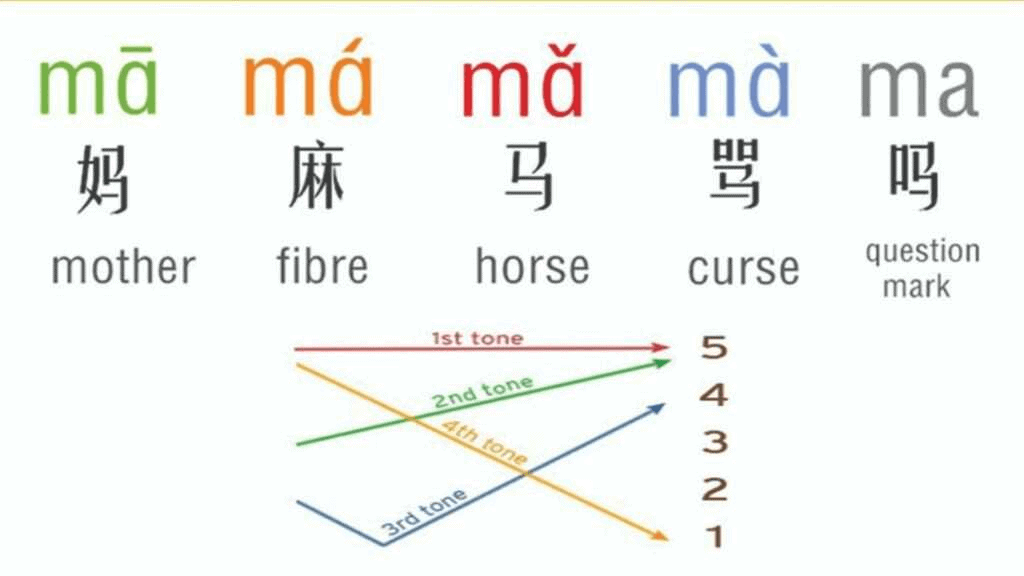
Reality: Yes, tones are critical—the word ma can mean “mother” (妈, mā), “hemp” (麻, má), “horse” (马, mǎ), or “scold” (骂, mà) depending on inflection. But humans are wired for tonal nuance.
Science-Backed Success:
- A 2023 study by Beijing Language and Culture University found that learners who practiced tones through music or mimicry achieved accuracy rates of 85% within six months.
- Tools like Speechling use AI to compare your pronunciation to native speakers, offering instant feedback.
Myth 3: “Chinese Grammar Is Chaotic”
Reality: Mandarin grammar is refreshingly simple. Unlike French or German, there are:
- No Verb Conjugations: 吃 (chī) means “eat,” whether yesterday, today, or tomorrow.
- No Plurals or Genders: Context does the work. “Three book” (三本书) is perfectly clear.
- Flexible Sentence Structure: While Subject-Verb-Object is standard, poets and advertisers often play with word order for artistry.
Why Learn Chinese? More Than Just Language
A. Career Rocket Fuel
China’s $18 trillion economy—the world’s second-largest—craves bilingual talent. LinkedIn reports a 300% increase since 2020 in global job postings requiring Mandarin, spanning:
- Tech: Roles at Alibaba, ByteDance (TikTok’s parent), and Huawei.
- Diplomacy: The U.S. State Department offers salary bonuses for Mandarin proficiency.
- Entrepreneurship: Tap into China’s e-commerce giants like Pinduoduo or cross-border platforms like Tmall Global.

B. Cultural Mastery
Learning Chinese isn’t just vocabulary—it’s unlocking:
Philosophy: Read Confucius’ Analects or Laozi’s Tao Te Ching in their original depth.
Modern Media: Fluency in Mandarin unlocks direct access to China’s vibrant media landscape. Instead of relying on subtitles, learners can stream popular dramas like The Untamed (陈情令) and fully grasp the emotional nuance, cultural references, and historical dialogue in real time.


Beyond scripted content, understanding Mandarin allows you to keep up with viral Douyin (the Chinese version of TikTok) trends—whether it’s decoding fast-paced slang, understanding meme culture, or following influencers who rarely post in English. Engaging with modern media not only sharpens listening skills but also keeps learners in sync with the ever-evolving rhythm of youth culture in China.
💡Learn more about what is Douyin and its differences with Tiktok!
Social Fluency: Compliment a Shanghai local’s fashion with “你真时髦!” (Nǐ zhēn shímáo!) or haggle at a Beijing night market like a native.
C. Study in China: Immersion Accelerates Mastery

China’s government supports language and cultural immersion by offering over 50,000 scholarships annually through the China Scholarship Council (CSC), making it one of the most generous state-sponsored education programs globally. These scholarships are open to students from across the world and cover tuition, accommodation, and often monthly stipends, significantly lowering the cost barrier for international study.Universities like Peking, Tsinghua, and Fudan provide:
- Intensive Language Programs: These programs typically feature more than 20 hours of intensive Mandarin classes per week, focusing on listening, speaking, reading, and writing. Many language courses are complemented by modules in Chinese calligraphy, Tai Chi, or traditional painting, allowing students to internalize cultural elements while enhancing their understanding of the language’s roots.
- Internship Tie-Ups: Beyond the classroom, universities offer internship opportunities in partnership with leading companies, especially in major cities like Shanghai. Students may work part-time or take up summer placements at Fortune 500 firms, applying what they’ve learned in real-world business environments while improving their Business Chinese skills. This practical exposure builds fluency in formal, professional settings, which is rarely achieved through classroom study alone.
- Cultural Immersion: Students often participate in rural homestays in provinces like Yunnan or Guizhou, where they interact with local families, experience minority customs, and hear regional dialects firsthand. Additionally, many universities organize weekend trips to historical and cultural sites such as the Great Wall, Forbidden City, or ancient water towns like Wuzhen, providing a deeper connection to China’s vast heritage and linguistic diversity.

Smart Study Hacks: From Beginner to Advanced

Phase 1: Building Foundations (0–6 Months)
When starting out, focus on mastering Mandarin’s most unique feature: the four tones. These tonal differences can completely change the meaning of a word, so early mastery is crucial. Use tools like Pinyin Trainer or ChineseSkill to drill tones daily through spaced repetition and pronunciation feedback.
Next, build a strong foundation of survival vocabulary. Start with 50 high-frequency words and phrases like 谢谢 (xièxie, “thank you”) and 多少钱 (duōshǎo qián, “how much?”), which are essential for everyday interaction. Don’t aim for complexity—focus on usability.
To develop writing familiarity, spend 15 minutes each day practicing character strokes with platforms like thatsmandarin and applyforchina. These platforms are designed to reinforce stroke order, spacing, and visual memory. This helps characters stick in long-term memory.
A simple but powerful hack: label your surroundings. Stick Post-its on everyday objects, like 门 (mén, “door”) or 冰箱 (bīngxiāng, “fridge”). This builds subconscious recognition and constantly exposes you to character forms in your living space.
Phase 2: Conversational Confidence (6–12 Months)
Once you’ve got the basics, shift your focus to speaking and listening fluency. Use language exchange platforms like thatsmandarin to find native speakers who want to practice with you. Schedule weekly video chats to build real-time comprehension and confidence.
Try the shadowing technique, where you listen to native dialogue and repeat it aloud, mimicking tone, speed, and intonation. Shows like Growing Up with Chinese or podcasts like ChinesePod offer scripted dialogues that are perfect for this.
Don’t study grammar in isolation—learn it in context. Tools like Anki let you “sentence mine,” collecting real-life phrases that include useful grammar structures like 如果…就… (Rúguǒ…jiù, “If…then…”) or 虽然…但是… (Suīrán…dànshì, “Although…yet…”). This reinforces patterns in a natural, memorable way.
Phase 3: Fluency & Refinement (1+ Years)
After a year, you’ll be ready to specialize. Start expanding your vocabulary in specific fields—whether it’s business Mandarin, medical Chinese, or tech industry terms. Tailored vocabulary helps you communicate effectively in professional or academic settings.
Challenge yourself with native-level content. Watch Mandarin news on CCTV-4, follow YouTube channels or Bilibili vloggers, or dive into modern novels like 活着 (Huózhe, To Live) by Yu Hua. This trains you to think in Mandarin and better understand tone, nuance, and humor.

Finally, test your progress with the HSK (Hànyǔ Shuǐpíng Kǎoshì) exams—the official Chinese proficiency test. HSK 6 is the gold standard and proof of near-native fluency, recognized by universities and employers across China and globally.
💡Learn more about what is HSK, their levels, and how to prepare for HSK test!
The Power of Chinese Language Courses
Structured courses can completely change the narrative that Chinese is “too hard” to learn. With the right guidance, resources, and practice routines, mastering Mandarin or even traditional Chinese characters becomes much more achievable. Here’s how formal study paths are making a difference:
A. University Programs
Top universities in China offer intensive, professionally designed programs that accelerate language learning. Peking University’s Chinese Language Division runs a 6-month intensive course focusing heavily on building HSK-level skills, from beginner to advanced stages. The curriculum is structured to guide students systematically through vocabulary acquisition, grammar comprehension, and real-life communication practice.
Meanwhile, Tsinghua University’s Summer Immersion Program offers a different flavor of learning. Students attend language classes in the morning and spend afternoons visiting tech parks in Beijing’s Zhongguancun—often called “China’s Silicon Valley.” This blend of classroom study and field experiences not only strengthens language skills but also exposes students to modern Chinese business culture and innovation.

B. Confucius Institutes
Around the world, Confucius Institutes make Chinese language education accessible through their 500+ global branches. Sponsored by the Chinese government, these centers offer a variety of affordable (often free) activities.
Students can join workshops on Chinese calligraphy, participate in tea ceremony demonstrations, or enroll in Mandarin crash courses for travelers and business professionals. Many branches also provide structured HSK preparation programs, including mock exams and one-on-one feedback sessions, helping students boost their test performance and gauge their real-world proficiency.

Conclusion: Your Chinese Adventure Awaits
So, is the Chinese language hard to learn? It certainly demands dedication, consistency, and an open mind. But with today’s powerful tools, a wide variety of tailored Chinese language courses, and incredible immersive opportunities to study in China, achieving fluency is more accessible than ever before. Every stroke written, every tone mastered, and every conversation held brings you closer to unlocking one of the richest languages and cultures on Earth.
Ready to Begin?
At ApplyforChina, we specialize in turning hurdles into stepping stones. Our free consultations guide you through every step of the journey—from identifying scholarship opportunities and assisting with visa applications to helping you select the best language programs across China.
Whether your dream is to decode Tang dynasty poetry, negotiate multimillion-dollar deals in fluent Mandarin, or simply enjoy authentic 小笼包 (xiǎolóngbāo, soup dumplings) in a local night market, we are here to make your journey from “Chinese hard” to “Chinese mastered” smooth and rewarding.
开始学习吧! (Let’s start learning!)