
Apartments in China: Rent, Buy & Live Like a Local
Whether you’re moving to China for work, study, or a long-term adventure, one of your first hurdles will be figuring out where and how to live. From renting short-term apartments to finding out how to rent a flat in China, understanding the housing landscape is key. This guide also covers the average rent in China, so you can make informed budgeting decisions based on real local prices.
1. Renting an Apartment in China
Where to Look?
China’s major cities, like Beijing, Shanghai, Shenzhen, and Guangzhou, have active rental markets. One of the most popular options is to contact an agent in your city or country of origin. Although prices might have gone up a little, they often provide an all-in-one service that includes finding a place based on your requirements, handling the contract, and assisting you with resident permits.
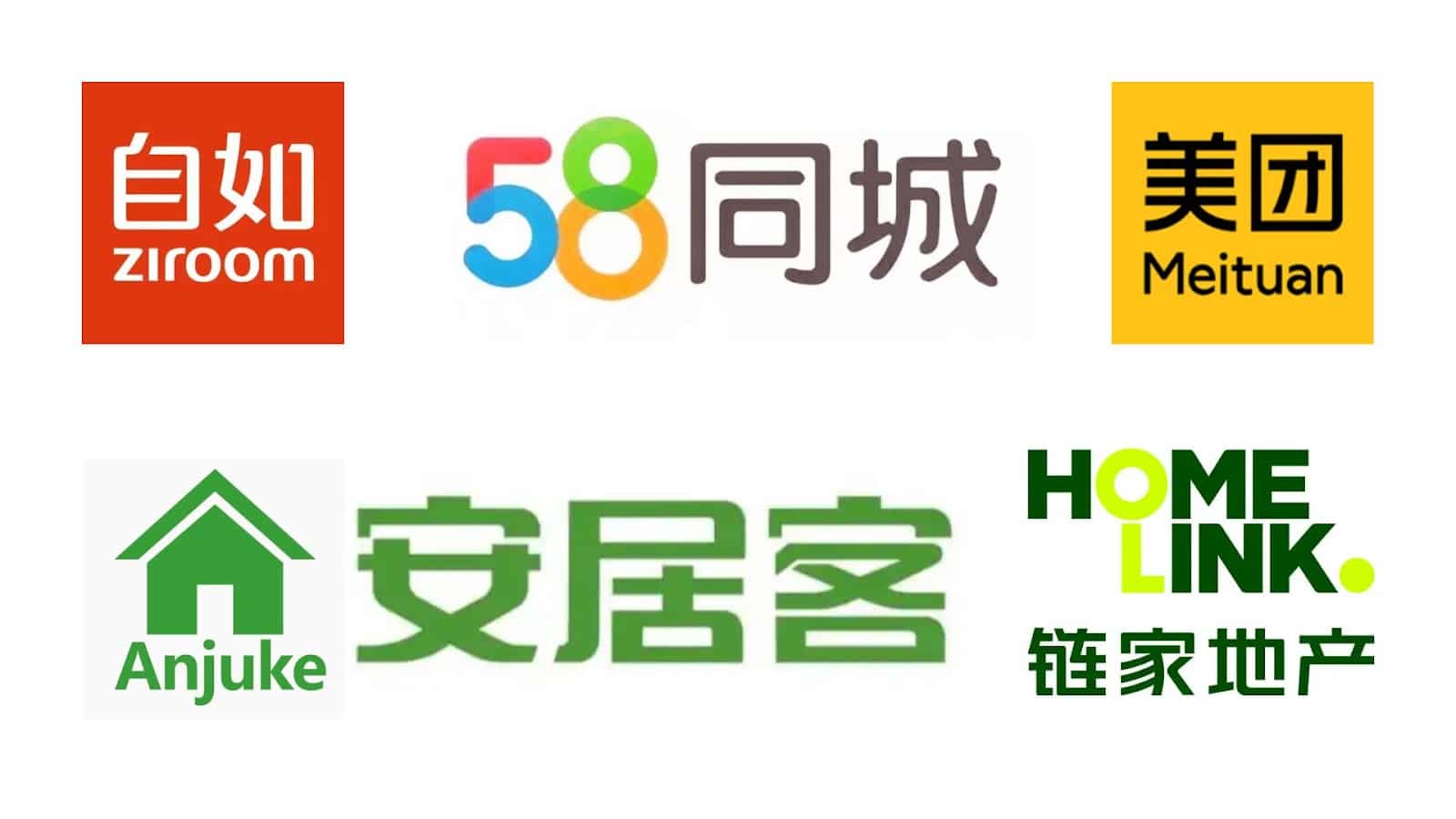
Another way to find an apartment is to find rent listings on the all-in-one app—WeChat. Through WeChat mini-program features, you can search for the mini-apps of popular local rental markets without needing to download another app on your phone, such as:
- Ziroom (自如)
- 58同城 (58.com)
- Anjuke (安居客)
- Lianjia (链家)
- Meituan (美团)
The benefits of using these applications are its easy access and the freedom to compare different apartments and its prices and services easily. Moreover, you can also contact and inquire the landlord yourself through their chatting feature, and can sign the contract online.
Precautions to Take
While using an application to rent an apartment is very convenient, there may be some drawbacks, such as not being able to see the apartment in person, assessing the actual condition of the apartment and its furniture, and being unaware of the characteristics of the surrounding areas and neighbors. This is why it’s essential to take certain precautions. Here are some important points to consider before renting an apartment:
- Take a tour: If you decide to rent through an app, make sure that you contact them to take a tour around the apartment and check the surrounding areas and nearby commute. You would want to rent a place near a bus station or MRT for convenience.
- Apartment Conditions: Ensure that you examine all areas of the apartment and verify that all provided furniture is functioning properly. Additionally, you should check the water and electricity to make sure there are no leaks in the pipes, and confirm that all outlets are working correctly and not leaking electricity. Furthermore, you may want to spend a couple of hours in the apartment to determine whether there are noisy neighbors or if the direction of the sunlight meets your preferences.
- Renting Safety: Most importantly, do not, never, ever, make a deal outside of the application. As a third party, the application will charge a certain amount to the landlords, and sometimes they use this as a “reason” to get you to sign the contract outside the application. However, the application is there as a third party to ensure the safety of the transaction, including chat records, so never add their WeChat and contact them or make the deal privately for safety reasons.

Price Range
Curious about the average rent in China? Rental prices vary greatly depending on your city, location, apartment size, and whether you’re near the city center or in the suburbs. Whether you’re trying to rent a flat in China for the short or long term, here’s a breakdown by major city.
1. Rent in Beijing (北京市)
Studio apartment: RMB 4,000 – 8,000/month (USD 555 –1,110/month)
1BR + LR apartment: RMB 6,000 – 15,000/month (USD 830 – 2,080/month)
(Central areas like Chaoyang, Dongcheng, and Haidian are more expensive.)
2. Rent in Shanghai (上海市)
Studio apartment: RMB 4,500 – 9,000/month (USD 625 – 1,250/month)
1BR + LR apartment: RMB 6,500 – 16,000/month (USD 900 – 2,220/month)
(More expensive in Jing’an and Xuhui, but cheaper in Pudong and Minhang outskirts.)
3. Rent in Shenzhen (深圳市)
Studio apartment: RMB 3,500 – 7,500/month (USD 485 – 1,040/month)
1BR + LR apartment: RMB 5,000 – 12,000/month (USD 695 – 1,665/month)
(Futian and Nanshan are pricier; Longgang is cheaper.)
4. Rent in Chengdu (成都市)
Studio apartment: RMB 2,000 – 5,000/month (USD 280 – 695/month)
1BR + LR apartment: RMB 3,000 – 7,000/month (USD 415 – 970/month)
(Tianfu New Area and High-Tech Zone are mid-range; the city center is costlier.)
5. Rent in Hangzhou (杭州市)
Studio apartment: RMB 2,500 – 6,000/month (USD 350 – 830/month)
1BR + LR apartment: RMB 4,000 – 9,000/month (USD 555 – 1,250/month)
(The West Lake area is expensive; Qiantang and Binjiang are mid-range.)
Foreigners often pay more if they don’t negotiate or use expat-facing platforms, so it’s worth comparing local sites or enlisting a local friend to help.
Lease Terms & Deposits
Standard leases are for 1 year, but some landlords accept short-term or monthly rent. If you decide to rent an apartment in China, you’ll usually have to pay:
- 1–3 months’ rent as deposit
- Agency fee (if using an agent): Typically half to one month’s rent
- Monthly rent upfront or every 3 months
Always ask for a 发票 fapiao (official invoice) if your company reimburses the accommodation costs.
2. Legal Requirements for Foreigners Renting in China
Foreigners must register their residence within 24 hours of moving in. This isn’t optional—it’s a legal requirement. Usually, your agency or the building management will help you register your residence information. Here’s what you need to do:
Step-by-Step Guide:
- Sign your lease. Get a contract in both Chinese and English if possible.
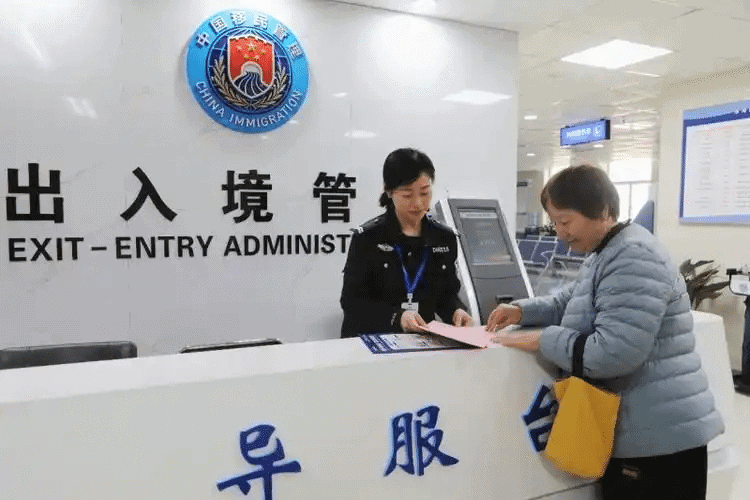
- Go to the local Public Security Bureau (PSB) or “公安局出入境管理 gōngānjú chūrùjìng guǎnlǐ” with:
- Your passport and valid visa
- A copy of the lease
- The landlord’s property ownership certificate
- The landlord (they often need to accompany you)
- Register your residence.
- You’ll receive a Temporary Resident Registration Form (暂住证 zàn zhù zhèng), and sometimes your landlord or agency will help you with this. If not, make sure to mention it to your landlord, as they have the responsibility to help you register with the local police.
- If you’re staying over a month, you need to apply for a Resident Permit (居留证 jù liú zhèng) using your Temporary Resident Permit (暂住证 zàn zhù zhèng) within one month.
P.S. Failing to register can cause visa issues or fines, so don’t skip this step.
3. Buying Property in China
Purchasing property in China, like an apartment, is achievable for foreigners; however, it involves a slow and regulated process.
Who Can Buy:
- Foreigners who’ve worked or studied in China for at least one year
- You must buy for personal use (no investing or subletting for profit)
What You’ll Need:
Property ownership in China is technically a 70-year leasehold for residential properties, even for locals. That’s how China’s system works, which is why land is owned by the state.
- Valid passport and visa
- Proof of at least one year of continuous residence in China
- Down payment (often 30–50% of the property price)
- Approval from local authorities
Additional Costs:
- Taxes and fees (about 3–5% of property price)
- Agent and legal fees
- Notarized translations of documents
Most foreigners opt to rent instead due to the paperwork and long-term limitations involved in buying unless they plan to continue staying in China for a very long period or perhaps permanently.

4. Living Like a Local
Once you’ve locked down your apartment, you are ready to really settle in. Now, let’s talk about how you can live and thrive like a local!
Utilities & Bills
1. Electricity and Water Bills
You can say that, on average, the electricity, water, and gas bills are cheaper than in US and can be either, and are usually prepaid or paid monthly. But still, pay attention to the different types of charges in China. There are two different standards for the electricity and water bills in China, which is the Residental Water and Electricity “民水民电 mín shuǐ mín diàn” and Commercial Water and Electricity “商水商电 shāng shuǐ shāng diàn.” So, what are the differences?
| Residential Water and Electricity民水民电 mín shuǐ mín diàn | Commercial Water and Electricity商水商电 shāng shuǐ shāng diàn |
| Charged on residential/houses. | Charged on business/enterprise, which means you paid to the apartment, and they will pay the bill to the government. |
| Cheaper, different in each city and region, but mostly around 0.6 RMB/kWh for electricity and 3.9 RMB/ton for water. | Pricier, still depends on the city and region, but the average is around 1.25 RMB/kWh for electricity and 5.1 RMB/ton for water. |
| Average bills for one personMonthly water bills: 10-20 RMBMonthly electricity bills: 50-100 RMB | Average bills for one personMonthly water bills: 20-50 RMBMonthly electricity bills: 100-300 RMB |
If you’re unsure whether to rent a house or an apartment, and if the rent is lower than the high utility expenses, consider opting for a property with commercial water and electricity. However, if the rent does not significantly lessen the burden of high utility costs, it’s advisable to choose a home with private water and electricity.
2. Fast and Cheap internet
The internet in China already 5G, which is the fastest in this era, and most of the provider offer a pretty cheap prices compared to the US. In China, the primary mobile service providers are China Mobile (中国移动 zhōng guó yí dòng), China Unicom (中国联通 zhōng guó lián tōng), and China Telecom (中国电信 zhōng guó diàn xìn). In comparison, foreigners typically prefer China Unicom because it offers extensive coverage in urban areas, robust 4G/5G services, and is more compatible with international devices.

Apps You’ll Need:
1. WeChat (微信 wēi xìn):
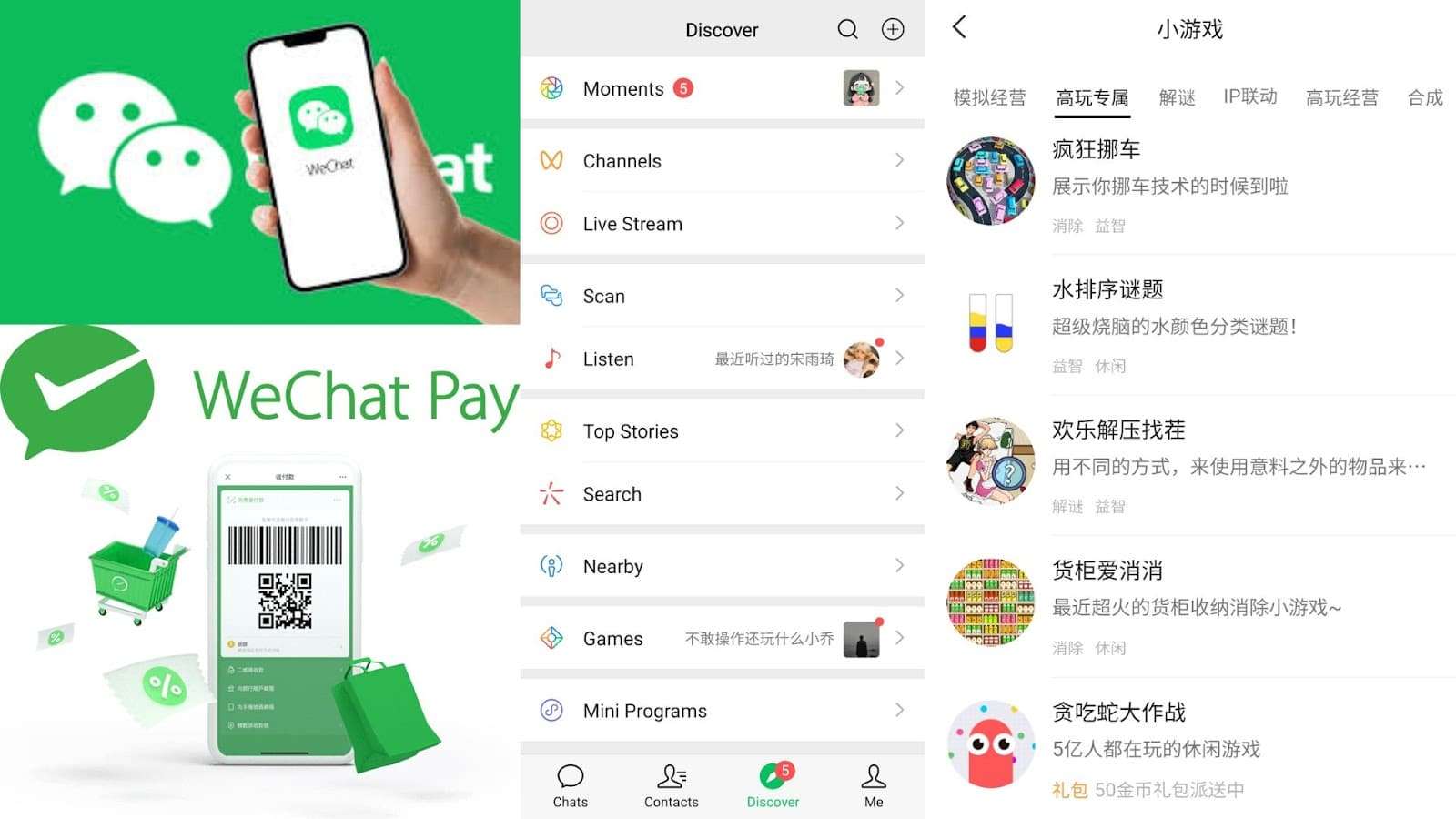
For everything—paying bills, chatting with your landlord, even unlocking smart locks and playing games. As mentioned before, WeChat is a one-and-all application, it seems like you don’t even need any other apps on your phone. What features can you use?
- Social Media: First of all, you can use it to chat, like using WhatsApp. But other than that, you can even browse and post on social media using your “Moments” and even see your friends’ updates.
- Payment: One of the most used features of WeChat will probably be WeChat Pay (微信支付 wēixìn zhīfù). You can use the scan features on your WeChat to pay for almost everywhere in China. Read more about China Payment Guide.
- Watch Videos: You can also watch short videos using “Channels” and “Live Stream” features, just like how you watch TikTok or YouTube shorts. Read more about the difference between TikTok and China Douyin.
- Mini Program Access: Utilizing the mini program allows you to access various Chinese applications such as Ziroom (自如), 58同城 (58.com), and more. Additionally, you can access your banking application, read Chinese newspapers, book a flight or train ticket from 同城旅行 (tóng chéng lǚ xíng), or even purchase a concert ticket with 猫眼 (māo yǎn).
- Play Games: Surprisingly, you can also play games using WeChat without needing to download separate applications. There are numerous genres of games available, ranging from simple match-three games to creative puzzle games.
2. Meituan & Ele.me (美团 měituǎn & 饿了么 è le me):
For food delivery, the yellow kangaroo of Meituan and the cute blue icon of Ele.me dominate the Chinese food delivery system. People often use these apps to order food online for either delivery or self-pick-up. In addition to their easy-to-access apps, using the self-pick-up option provides bigger discounts and saves you time compared to ordering and waiting at the store.

3. Dianping (大众点评 Dàzhòng diǎnpíng):
China’s Yelp, you can search ratings of restaurants, entertainment places, and others. If you do not know what to eat, try to find a recommended restaurant using Dianping, and you might land yourself a discount.

4. Local Maps:
Google Maps is unreliable in China. As you might know, China does not support Google services, and even if you use a VPN to run Google Maps, it won’t work properly. However, you can use their local map such as Baidu Maps (百度地图 bǎidù dìtú), Gaode Maps (高德地图 gāodé dìtú), or Tengxun Maps (腾讯地图 téngxùn dìtú), and they work wonders!

Etiquette & Expectations
When coming to China, you need to observe some of the key etiquette, such as greeting with a nod or handshake, avoiding prolonged eye contact, and accepting or giving out gifts with both hands. One of the main values of the Chinese is to respect elders and be kind to the younger generation, so if you see them having no seats on the bus or MRT, offer them your seat.
- It’s normal for landlords to request to see your visa and passport, so no need to be too defensive. Just make sure you get a clear explanation of what they want to use it for and for how long.
- Chinese apartments are often furnished, but “furnished” means a basic bed and desk. Therefore, make sure you know what you are getting before you rent the place.
- Garbage separation and recycling rules vary by city. You can ask your building manager or landlord about this, but basically, China will divide your trash into recyclable, non-recycleable, and food waste.
- Chinese people eat with chopsticks, even rice. So, if you’re not used to using chopsticks or cannot use them at all, you can learn first or bring your own spoon and fork.

Final Tips
- Always register at the PSB when you moved in to new apartments.
- Don’t wire money in advance without seeing the apartment in person.
- Make sure the contract and all are clear, without any loopholes, and have a copy of your own.
- Document everything—take photos when moving in, save all receipts, take a picture of the person you get in contact with, etc.
Living in China is easier when you understand the system and play by the rules. Renting or buying can be a smooth process with the right preparation—and once you’re settled in, day-to-day life can be both affordable and full of cultural perks.
If you worry about your future living in China, agency, or have any other inquiry, feel free to have a free consult with ApplyforChina.