
Chinese Liquor and Baijiu
When people think about drinks from China, tea usually comes first. But regarding alcohol, one spirit dominates Chinese history, culture, and consumption: baijiu spirit, China’s signature spirit and the most important Chinese liquor.
Clear in appearance but explosive in aroma, baijiu often surprises first-time drinkers. Many expect something neutral like vodka. Instead, they encounter a drink so intense that journalist Dan Rather once famously described it as “liquid razor blades.”
And yet, baijiu is not a fringe curiosity. People know it as the most consumed distilled alcohol in the world. It is sold in larger amounts than whiskey, vodka, gin, tequila, and rum combined. Despite this, it remains largely unknown outside China and the United States, making it one of the most misunderstood traditional Chinese beverages and Chinese alcoholic drinks.
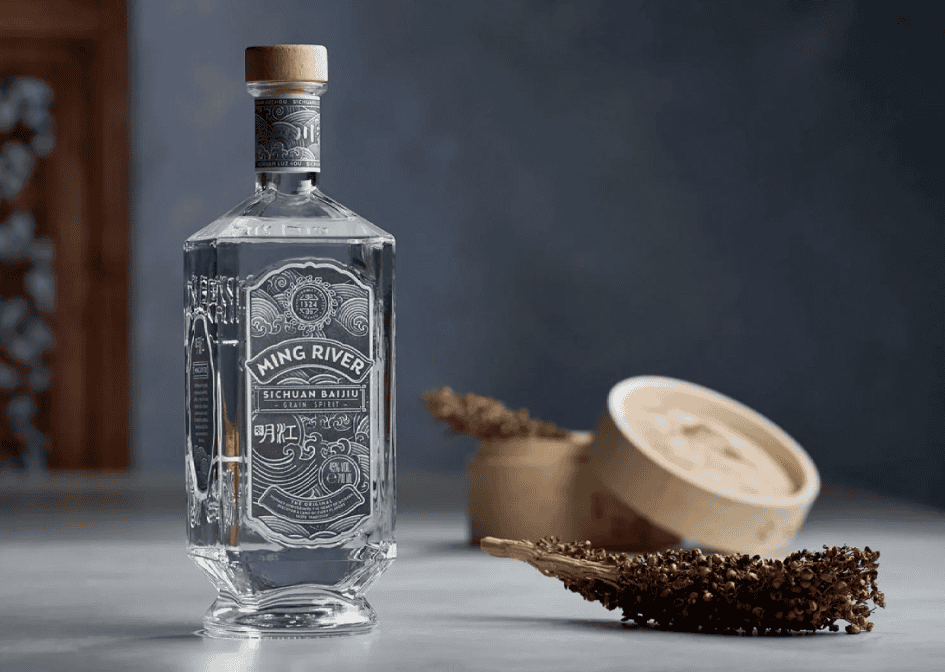
What is Chinese baijiu liquor?
Baijiu (白酒) is a clear Chinese baijiu liquor and a distilled Chinese liquor. Producers make it from fermented sorghum, though rice, wheat, millet, corn, and other fermented grains may also be used.
The choice of raw materials depends on the region, production process, and style. Producers typically bottle baijiu at 40–60% alcohol by volume, making it one of the most well-known high-ABV spirits, with some final products reaching even higher strengths.
Baijiu is deeply woven into Chinese drinking culture and everyday life. It appears at:
- family celebrations and weddings
- festivals and holidays
- business banquets and formal dinners
- casual meals in many regions
Historically, grain-based alcohol has existed in China for over a thousand years, with archaeological evidence tracing it back more than 9,000 years. Long before modern distillation, drinking alcohol played a role in ritual, hospitality, and storytelling among Chinese people, including during the Han Dynasty.
Marco Polo wrote about China and described its alcohol as “good, clear, and pleasing to the eye.” This shows how important Chinese drink traditions were even centuries ago.
For anyone seeking to understand drinks from China, baijiu is foundational.
Why baijiu tastes so different from Western spirits
Baijiu does not aim for neutrality. Unlike vodka, baijiu celebrates unique flavors and intensity.
Famous bartender Matt Conner has worked extensively with baijiu. He explains that its flavors can range from overripe fruits to hard cheese, while many styles also show notes of fermented tropical fruit. These bold aromas are markers of craftsmanship and wide variety.
This is why baijiu often feels stronger than its alcohol percentage suggests. The aroma arrives before the sip, shaping the entire experience.
Baijiu is classified by aroma, not by region
One of the most important concepts for understanding baijiu spirit and the types of baijiu is its aroma-based classification.
The Wine & Spirit Education Trust (WSET) classifies baijiu by aroma profile. While there are many styles, four major aroma categories dominate:
- strong aroma baijiu (浓香)
Fruity, sweet-smelling, and ester-rich. Often described as pineapple, banana, or star anise. This is the most widely consumed style in China and is closely associated with Sichuan Province and producers such as Luzhou Laojiao. - light aroma baijiu (清香)
Clean, dry, and crisp. More restrained and approachable, especially for beginners. - sauce aroma baijiu (酱香)
Bold, savory, and umami-driven. Often compared to fermented soy products or aged cheese. Highly polarizing and usually recommended for experienced drinkers. Kweichow Moutai is the most famous example. - Rice aroma baijiu (米香)
Softer and gentler, typically made from rice. Often lower in intensity and easier for newcomers.
This aroma-based classification system explains why two bottles of baijiu can taste completely different despite looking identical.

What baijiu is made from
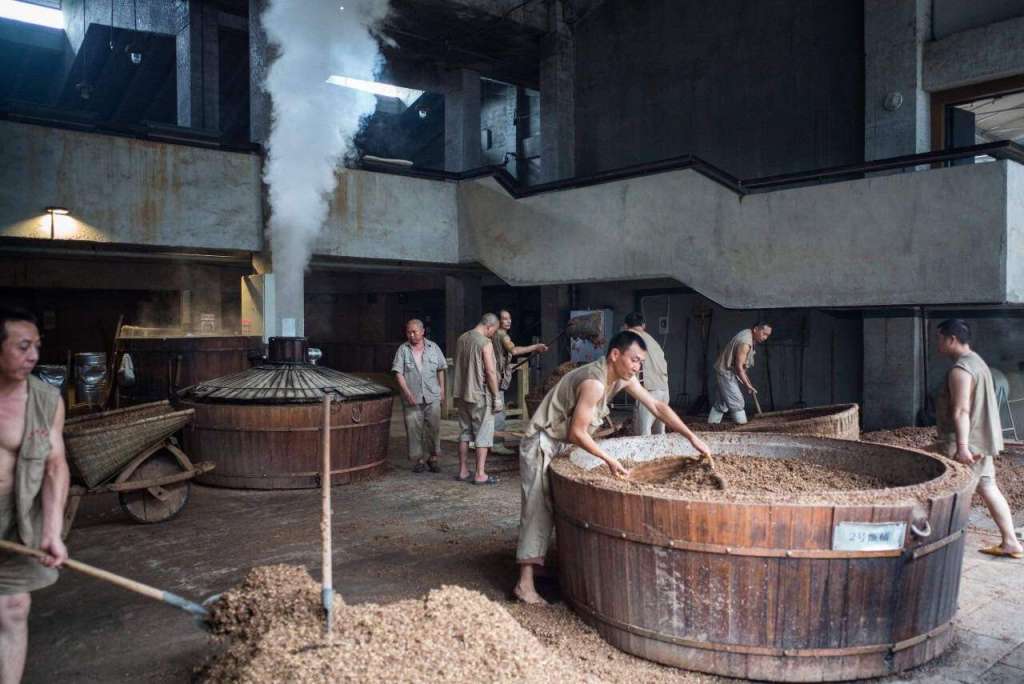
Most traditional baijiu is made from fermented sorghum, a grain well suited to China’s climate. Other fermented grains such as rice, wheat, barley, millet, and corn may also appear depending on regional traditions and production process.
Baijiu production relies on:
- solid-state fermentation
- complex fermentation starters containing yeast, fungi, and bacteria
- long fermentation periods, sometimes lasting months
Author and baijiu educator Derek Sandhaus has noted that baijiu’s production resembles fermented foods more than neutral spirits. This explains its depth, funk, and complexity, as well as its importance among traditional Chinese beverages and Chinese alcohol.
Why baijiu is so strong
Baijiu’s high alcohol content comes from traditional distillation methods.
Alcohol evaporates at a lower temperature than water. During distillation, producers heat the fermented grain mash directly. Alcohol and aromatic compounds rise as vapor and then condense back into liquid.
Unlike many Western spirits, baijiu producers often:
- heat the mash itself rather than a liquid mixture
- rely on traditional distillation methods
- distill fewer times while maintaining high proof
As the vapor rises through layers of grain, it repeatedly condenses and evaporates. This process intensifies both alcohol and aroma. The final products can exceed 60% ABV even with a single distillation.
After distillation, producers often age baijiu underground before bottling it or adding fruits, flowers, or herbs.
Leftover mash and continuous fermentation
One unique feature of baijiu production is how leftover mash is reused.
In some traditions:
- mash is returned to fermentation pits
- older fermentation environments are preserved for decades
- leftover grain contributes to consistency and depth
This practice builds complexity over time and reduces waste. In famous strong aroma baijiu traditions, experts consider fermentation pits mature only after many years of use, becoming part of a distillery’s identity.
Baijiu etiquette: how it’s traditionally consumed
Baijiu is a social ritual rooted in Chinese food and drink culture and business banquet drinking.
Key etiquette rules include:
- Only clink glasses with alcohol, not tea or water
- Use two hands when offering or receiving a glass
- Touch your glass below a senior’s to show respect
- Fill alcohol glasses generously to signal goodwill
- Drink with food, not alone
Baijiu glasses are typically small. The goal is not to drink large quantities at once, but to toast frequently and pace the meal.
For beginners to baijiu spirit, a simple technique is often recommended:
- Exhale
- Take a small sip
- Inhale through the nose
- Exhale through the mouth
This helps soften the burn and allows the aroma to register more pleasantly.
Other traditional Chinese alcoholic beverages
While baijiu dominates Chinese liquor culture, it is not the only option. Other important traditional Chinese beverages and Chinese alcohol drinks include:
- Mijiu (米酒) – fermented rice drink, mildly sweet
- Huangjiu (黄酒) – brewed rice wine, often served warm
- Kumis (马奶酒) – fermented mare’s milk from northern regions
- Osmanthus wine (桂花酒) – floral, aromatic, lightly sweet
Together, these drinks form a broader picture of drinks from China, shaped by geography, agriculture, and history.
Frequently Asked Questions About Baijiu
What is Chinese baijiu liquor?
Baijiu is a clear Chinese liquor made mostly from sorghum. It is known for its baijiu alcohol content and strong aroma.
What does baijiu taste like?
Baijiu can taste fruity, savory, funky, or floral. Flavors range from fermented fruit to rich umami notes and unique flavors.
Is baijiu stronger than vodka?
Yes. Baijiu is commonly 40–60% ABV, often stronger than standard vodka and other high-ABV spirits.
Is baijiu like soju?
No. Soju is usually lower in alcohol and smoother, while baijiu is stronger and far more aromatic.
What kind of alcohol is baijiu?
Baijiu is a fermented grain spirit and distilled Chinese liquor, classified primarily by aroma.
Why is baijiu so expensive?
Some baijiu are cheap, but premium bottles can be costly due to aging, traditional distillation methods, limited production, and gifting culture.
What is China’s most popular liquor?
Baijiu is widely regarded as the most popular liquor in China.
What type of liquor is guojiao?
Guojiao refers to Guojiao 1573, a premium strong aroma baijiu.